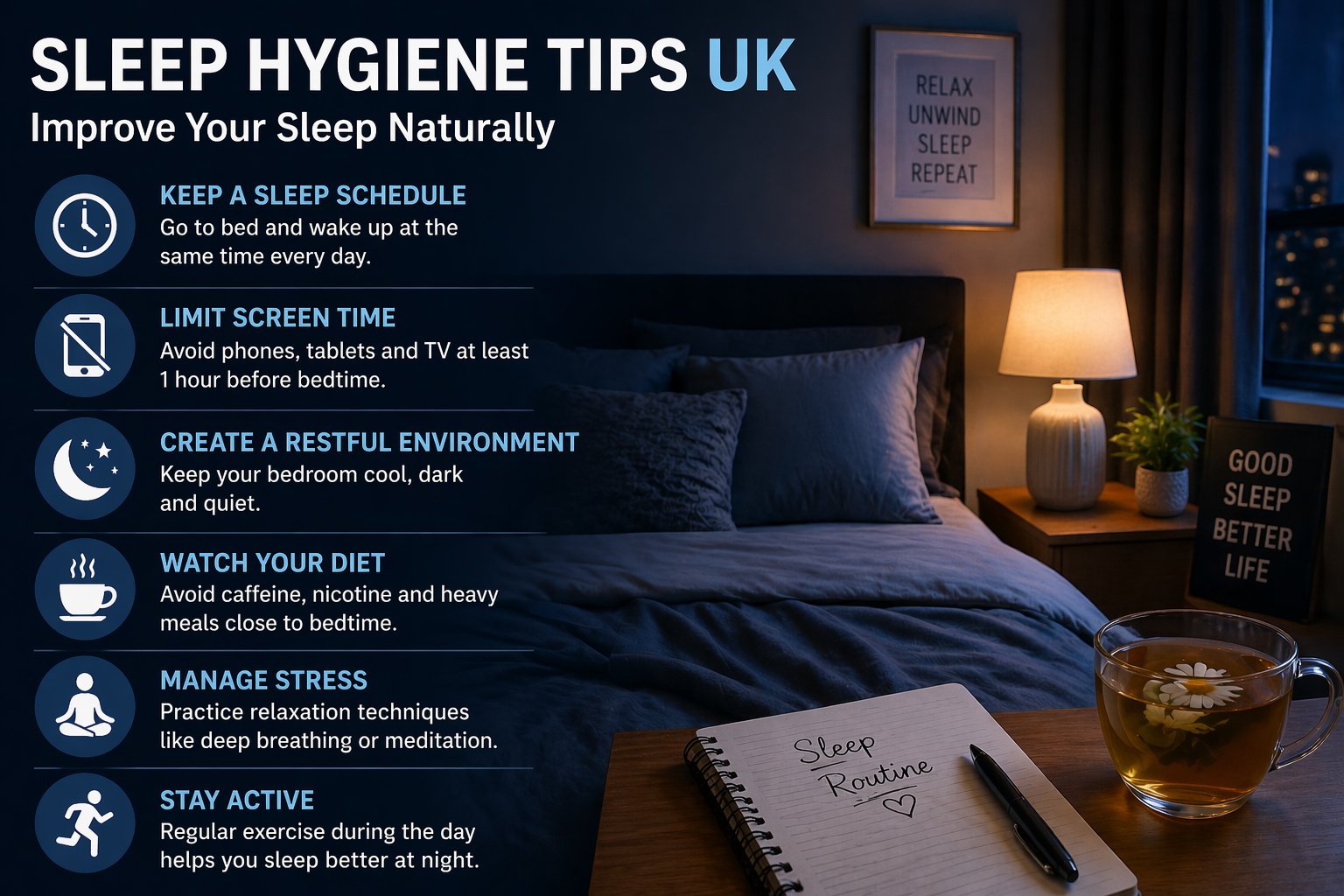
Buy Sleeping Pills UK – Sleep Hygiene Tips UK: Improve Your Sleep Naturally
Struggling to fall asleep or waking up feeling tired? You’re not alone. Poor sleep is a growing issue across the United Kingdom, with millions of adults reporting sleep difficulties every week. One of the most effective and natural ways to tackle this problem is by improving your sleep hygiene.
Sleep hygiene refers to the habits and environment that influence your sleep quality. By making small, consistent changes to your daily routine, you can significantly improve how quickly you fall asleep and how well you stay asleep..
In this guide, we’ll explore the most effective sleep hygiene tips UK residents can follow to enjoy deeper, more restorative sleep—without relying heavily on medication.
What Is Sleep Hygiene?
Sleep hygiene is a set of healthy practices designed to promote better sleep quality and consistency. It focuses on your bedtime routine, environment, and lifestyle choices.
According to the NHS, poor sleep hygiene is one of the leading causes of insomnia and disrupted sleep patterns in the UK.
Why Sleep Hygiene Matters
Good sleep hygiene isn’t just about comfort—it directly impacts your physical and mental health.
Benefits include:
- Improved concentration and productivity
- Better mood and reduced stress
- Stronger immune system
- Lower risk of chronic illnesses
Studies show that adults need around 7–9 hours of quality sleep per night for optimal health.
Best Sleep Hygiene Tips UK Residents Should Follow
1. Stick to a Consistent Sleep Schedule
Going to bed and waking up at the same time every day helps regulate your body clock.
Tips:
- Avoid sleeping in on weekends
- Set a fixed bedtime routine
- Use alarms to maintain consistency
2. Create a Relaxing Bedtime Routine
Your body needs signals to prepare for sleep.
Try:
- Reading a book
- Taking a warm bath
- Practising mindfulness or meditation
Avoid stimulating activities like watching intense TV shows or scrolling on your phone.
3. Optimise Your Sleep Environment
Your bedroom should be designed for rest.
Key factors:
- Keep the room cool (16–18°C is ideal in the UK)
- Use blackout curtains
- Reduce noise with earplugs or white noise
A comfortable mattress and pillows also play a crucial role.
4. Limit Screen Time Before Bed
Electronic devices emit blue light, which can interfere with melatonin production.
Best practices:
- Avoid screens at least 1 hour before bed
- Use night mode if necessary
- Replace screen time with calming activities
5. Watch Your Diet and Caffeine Intake
What you consume can directly affect your sleep.
Avoid:
- Caffeine after 2 PM
- Heavy meals late at night
- Alcohol before bedtime
Instead:
- Opt for herbal teas
- Eat light dinners
6. Get Regular Exercise
Physical activity helps regulate sleep patterns.
Recommendations:
- Exercise at least 30 minutes daily
- Avoid intense workouts close to bedtime
Even a short evening walk can make a difference.
7. Manage Stress and Anxiety
Mental health plays a huge role in sleep quality.
Effective methods:
- Journaling before bed
- Deep breathing exercises
- Practising gratitude
Chronic stress is one of the top contributors to insomnia in the UK.
Common Sleep Hygiene Mistakes
Avoid these habits:
- Using your bed for work or watching TV
- Taking long daytime naps
- Irregular sleep schedules
- Over-reliance on sleeping tablets
Fixing these mistakes can significantly improve sleep quality.
When Sleep Hygiene Isn’t Enough
While sleep hygiene is effective for many people, some cases require additional support.
Consider:
- Cognitive Behavioural Therapy (CBT-I)
- Short-term sleep aids
- Consulting a GP
If symptoms persist for more than 3–4 weeks, it’s best to seek professional advice.
FAQ
1. What are sleep hygiene tips?
Sleep hygiene tips are habits and practices that help improve sleep quality, such as maintaining a routine and creating a comfortable sleep environment.
2. How long does it take to improve sleep hygiene?
Most people notice improvements within 1–2 weeks of consistent changes.
3. Can sleep hygiene cure insomnia?
It can significantly improve mild to moderate insomnia, but severe cases may need additional treatment.
4. Is it okay to use your phone before bed?
No, blue light from screens can disrupt sleep hormones and delay sleep.
5. What is the best bedtime routine?
A calm routine including reading, meditation, or a warm bath is ideal.
Conclusion
Improving your sleep doesn’t always require medication—sometimes, small lifestyle changes can make a big difference. By following these sleep hygiene tips UK, you can create a healthier sleep routine and wake up feeling refreshed every day.
If you’re still struggling with sleep, combining these tips with professional guidance or trusted sleep solutions can help you achieve long-term results. Start improving your sleep tonight—your body and mind will thank you.