Buy Sleeping Pills UK –
A good night’s sleep is essential for maintaining physical health, mental wellbeing and everyday energy levels. However, getting enough sleep is not always easy. Even when you follow a regular bedtime routine, your bedroom environment may make it difficult to fall asleep, stay asleep or wake up feeling refreshed.
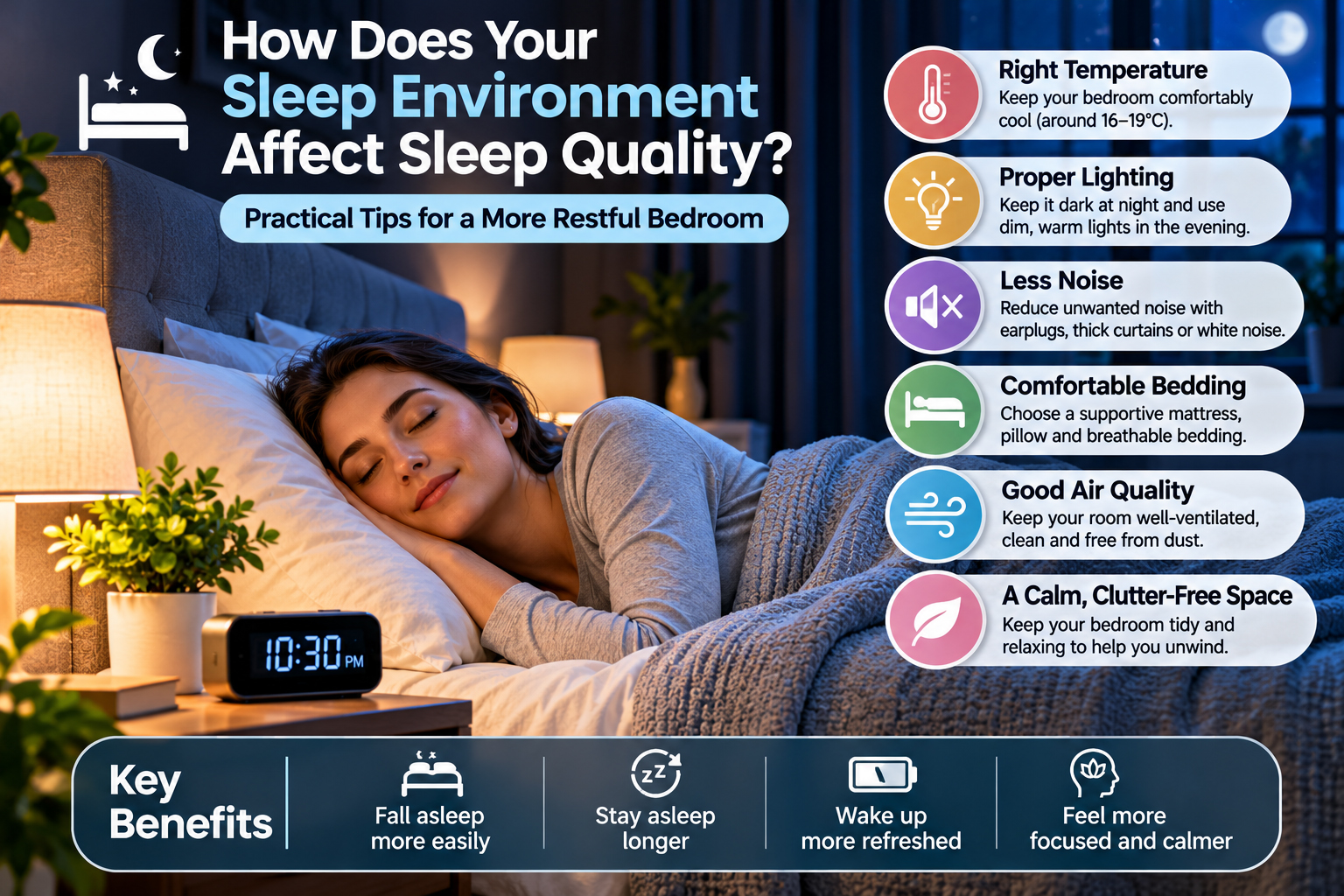
Factors such as room temperature, lighting, noise, mattress comfort, bedding and air quality can all influence how restful your bedroom feels. A room that is too warm, too bright or too noisy may cause interruptions throughout the night and make it harder to relax.
The good news is that creating a more sleep-friendly bedroom does not necessarily require expensive furniture or major changes. Simple adjustments to your surroundings can make your bedroom more comfortable and help support healthier sleeping habits.
In this guide, we explore how your sleep environment affects sleep quality and share practical tips to help you create a more peaceful and restful bedroom.
What Is a Sleep Environment?
Your sleep environment refers to the physical conditions and surroundings in which you sleep. It includes everything that may influence your comfort and ability to relax at bedtime.
Some of the most important factors include:
- Temperature: Whether your bedroom feels too hot, too cold or comfortable.
- Lighting: The amount of natural and artificial light in your room.
- Noise: Sounds from traffic, neighbours, household appliances or electronic devices.
- Bedding: The comfort and suitability of your mattress, pillows, sheets and duvet.
- Air quality: Ventilation, dust and other potential irritants.
- Bedroom layout: Whether your sleeping space feels calm, organised and free from distractions.
A comfortable bedroom can support a consistent bedtime routine and make it easier to settle down at night.
1. Room Temperature Can Affect Sleep Quality
Temperature is one of the most noticeable environmental factors affecting sleep. If your bedroom becomes too warm or too cold, you may find it difficult to get comfortable.
Your body naturally experiences changes in temperature as part of its sleep-wake cycle. An uncomfortable bedroom temperature may interfere with this process and cause you to wake up during the night.
Practical Tips to Maintain a Comfortable Temperature
- Keep your bedroom comfortably cool rather than excessively warm.
- Choose lightweight, breathable bedding when the weather is hot.
- Use additional blankets during colder months.
- Wear comfortable nightwear suitable for the season.
- Open a window before bedtime if it is safe and practical to improve ventilation.
- Consider using a fan during warmer weather if it helps you feel comfortable.
There is no single bedroom temperature that works perfectly for everyone. Your comfort, bedding and local climate all matter.
2. Lighting Plays an Important Role in Your Sleep-Wake Cycle
Light helps regulate your body’s internal clock, also known as the circadian rhythm. Exposure to natural daylight during the day helps support alertness, while darkness in the evening signals that it is time to prepare for sleep.
A bedroom with bright lights, streetlights coming through the windows or glowing electronic screens may make it harder for some people to relax at bedtime.
How to Create a Darker Bedroom
Try these simple changes:
- Install blackout curtains or blinds to reduce outside light.
- Switch off unnecessary lights before going to bed.
- Avoid leaving televisions and computer screens switched on overnight.
- Turn your mobile phone face down or place it away from your bed.
- Use a comfortable eye mask if you cannot completely block outside light.
- Choose soft, warm lighting in the evening instead of bright overhead lights.
Reducing unnecessary light exposure before bedtime can help create a more relaxing environment.
3. Noise Can Interrupt Your Sleep
Noise is another common reason why people struggle to sleep peacefully. Traffic, barking dogs, loud neighbours, household appliances and unexpected sounds can make it difficult to fall asleep or may wake you during the night.
Even when you become accustomed to certain background sounds, sudden changes in noise can still disturb your rest.
Ways to Reduce Bedroom Noise
Consider the following ideas:
- Keep doors and windows closed when outside noise is disturbing you, provided ventilation remains adequate.
- Use thick curtains to help reduce some external noise.
- Try comfortable earplugs if you can use them safely.
- Switch off unnecessary notifications and put your phone on silent.
- Move noisy electronic devices away from your sleeping area.
- Consider gentle background sounds or white noise if they help mask unpredictable noises.
If you share your bedroom, discuss sleeping arrangements that help both people rest comfortably.
4. Your Mattress and Pillow Matter More Than You Think
Your mattress and pillow directly affect your physical comfort during sleep. An unsuitable mattress may contribute to discomfort, while a pillow that does not support your preferred sleeping position may leave your neck feeling uncomfortable.
A mattress does not have to be expensive to be suitable. What matters is whether it provides comfortable and appropriate support for your body.
How to Choose Comfortable Bedding
Mattress
Choose a mattress that feels supportive and comfortable. Consider its condition, firmness and whether it suits your usual sleeping position.
Pillows
Select a pillow that helps keep your head and neck comfortable. Different sleeping positions may require different pillow heights and levels of support.
Bedsheets
Choose soft, breathable fabrics that feel comfortable against your skin. Cotton is one option that many people find comfortable.
Duvets and Blankets
Use bedding appropriate for the season. Heavy bedding may feel uncomfortable in warm weather, while lighter covers may not provide enough warmth during colder nights.
If you regularly wake up feeling uncomfortable, consider whether your mattress or pillow needs replacing.
5. Bedroom Air Quality and Ventilation Are Important
The air inside your bedroom can influence how comfortable your sleeping space feels. Poor ventilation, excessive dust, smoke and strong smells may make the room unpleasant, particularly for people who are sensitive to airborne irritants.
A bedroom that feels stuffy may also make it harder to relax.
Tips for a Fresher Sleeping Environment
- Open windows when appropriate to allow fresh air into the room.
- Clean floors, furniture and other surfaces regularly.
- Wash bedsheets, pillowcases and duvet covers regularly.
- Avoid smoking inside the bedroom.
- Keep damp areas clean and address any signs of mould.
- Avoid excessive use of strong fragrances and air fresheners.
- Keep pets’ bedding clean if they sleep in your room.
Good ventilation and regular cleaning can help maintain a more comfortable bedroom.
6. A Clutter-Free Bedroom Can Help You Relax
A messy or overcrowded bedroom may make it harder to switch off mentally at the end of the day. Clothes, paperwork, electronic devices and unfinished work can create distractions and make the room feel less relaxing.
Your bedroom should ideally be a place where you can disconnect from daily responsibilities and prepare for rest.
Simple Ways to Organise Your Bedroom
- Keep unnecessary items away from your bed.
- Put clothes and personal belongings in their proper places.
- Keep your bedside table organised.
- Remove work-related documents and equipment from your sleeping area where possible.
- Avoid using your bed as a workspace.
- Choose simple decorations and colours that make the room feel peaceful.
You do not need a completely minimalist bedroom. The aim is to create a space that feels comfortable and relaxing.
7. Keep Electronic Devices Away from Your Sleeping Space
Mobile phones, televisions, laptops and tablets can become major distractions at bedtime. Notifications, social media, videos and late-night browsing may keep your mind active when you should be winding down.
Screen exposure close to bedtime can also contribute to difficulty falling asleep for some people.
Healthy Bedroom Technology Habits
- Avoid scrolling through social media while lying in bed.
- Switch off televisions and computers before bedtime.
- Put your phone on silent or activate Do Not Disturb.
- Avoid checking messages every time you wake up during the night.
- Use an ordinary alarm clock if you want to keep your phone away from the bed.
- Establish a screen-free period before going to sleep.
Try to make your bed a place associated with rest rather than work, entertainment or constant notifications.
8. Choose Bedroom Colours and Lighting That Feel Relaxing
The appearance of your bedroom can influence how comfortable and peaceful it feels. Although there is no universally proven bedroom colour that guarantees better sleep, many people prefer softer, less stimulating surroundings.
You can create a relaxing atmosphere without completely redecorating your room.
Bedroom Design Ideas
- Consider gentle shades such as beige, cream, soft grey or muted green.
- Avoid lighting that feels excessively bright before bedtime.
- Keep decorations simple and avoid overcrowding walls and surfaces.
- Use comfortable curtains and bedding that complement the room.
- Choose lighting that can be easily dimmed in the evening.
The most important thing is to create a bedroom that feels peaceful and comfortable to you.
9. Keep Your Bedroom Clean and Maintain Good Hygiene
Clean bedding and a regularly maintained sleeping area can contribute to overall comfort. Dust, dirt, sweat and accumulated allergens may make your bedroom less pleasant.
Regular cleaning is particularly useful if you experience sensitivity to dust or other common household allergens.
A Simple Bedroom Cleaning Routine
- Change and wash bedsheets regularly.
- Wash pillowcases frequently.
- Clean mattresses according to the manufacturer’s instructions.
- Vacuum carpets and clean floors.
- Dust bedside tables, shelves and furniture.
- Wash curtains when necessary.
- Check for dampness, leaks or mould.
A clean sleeping area helps maintain a more pleasant environment and supports general household hygiene.
10. Create a Relaxing Bedtime Routine
A comfortable bedroom works best when combined with healthy sleep habits. Your body benefits from a regular routine that allows you to slow down before bedtime.
Going to bed at different times every night, using electronic devices late into the evening or consuming caffeine close to bedtime may affect your ability to fall asleep.
Steps to Build a Better Bedtime Routine
- Try to go to bed and wake up at consistent times each day.
- Reduce bright lighting in the evening.
- Avoid tea, coffee and other caffeinated drinks close to bedtime.
- Avoid heavy meals immediately before going to bed.
- Spend some time reading or doing another relaxing activity.
- Keep your bedroom quiet, dark and comfortable.
- Go to bed when you feel sleepy.
A consistent routine can help your body recognise when it is time to rest.
Common Bedroom Mistakes That May Affect Sleep
Sometimes small habits can make your sleeping environment less comfortable without you realising it.
Here are some common mistakes to avoid:
| Common mistake | What you can do instead |
|---|---|
| Keeping bright lights switched on | Reduce lighting before bedtime |
| Using a phone in bed for long periods | Put your phone away before sleeping |
| Sleeping in an excessively warm room | Adjust ventilation and bedding |
| Ignoring uncomfortable pillows | Choose suitable, supportive pillows |
| Allowing outside noise to disturb you | Try earplugs or reduce noise sources |
| Keeping the bedroom cluttered | Organise your sleeping area |
| Using the bed as a workspace | Keep work activities separate where possible |
| Not washing bedding regularly | Establish a regular cleaning routine |
Small improvements can make your bedroom more suitable for relaxation.
A Simple Checklist for a Better Sleep Environment
Before going to bed, use this checklist to see whether your bedroom is ready for a restful night.
-
The bedroom feels comfortably cool.
-
Unnecessary lights are switched off.
-
Curtains or blinds block unwanted outside light.
-
Noise and phone notifications are minimised.
-
The mattress and pillows feel comfortable.
-
Bedsheets and bedding are clean.
-
The room is reasonably tidy and well ventilated.
-
Electronic distractions have been put away.
-
The room feels calm and relaxing.
You do not need to make every change at once. Start with the areas that are most likely to disturb your sleep.
When Should You Seek Medical Advice About Poor Sleep?
Improving your bedroom environment may help you sleep more comfortably, but it cannot address every cause of sleep disturbance.
If you regularly struggle to fall asleep, wake up repeatedly during the night or feel tired throughout the day, it may be worth speaking with your GP.
Seek medical advice if you experience:
- Persistent difficulty falling asleep or staying asleep.
- Excessive daytime tiredness that affects everyday activities.
- Loud snoring accompanied by gasping, choking or pauses in breathing.
- Frequent waking that continues despite improving your sleeping habits.
- Sleep difficulties associated with ongoing pain, anxiety or other symptoms.
A healthcare professional can help identify possible causes and recommend appropriate support. Treatments for persistent insomnia may include cognitive behavioural therapy for insomnia (CBT-I), depending on your circumstances.
Frequently Asked Questions
1. Does your bedroom environment affect sleep quality?
Yes. Factors such as temperature, lighting, noise, bedding and overall comfort can influence how easily you fall asleep and whether you stay asleep throughout the night.
2. What is the best bedroom temperature for sleeping?
There is no single ideal temperature for everyone. A comfortably cool bedroom is generally recommended. Adjust your bedding, nightwear and ventilation according to your personal comfort and the weather.
3. Should a bedroom be completely dark for better sleep?
A dark bedroom can help support your natural sleep-wake cycle. Blackout curtains, blinds or an eye mask may help reduce unwanted light during the night.
4. Can noise affect sleep even if I am used to it?
Yes. Background noise and unexpected sounds may cause sleep interruptions, even when you feel accustomed to them. Reducing unnecessary noise can make your sleeping environment more peaceful.
5. How often should I change my bedsheets?
A regular washing routine helps remove accumulated sweat, dust and dirt. Many people choose to wash their bedsheets weekly, although individual needs may vary.
6. Can using a mobile phone in bed affect sleep?
Using a phone close to bedtime may keep your mind active and expose you to light that can interfere with sleep. Reducing screen time before bed may help you relax.
7. Does a comfortable mattress improve sleep?
A mattress that provides suitable comfort and support can help you settle into a comfortable sleeping position. An old or uncomfortable mattress may contribute to physical discomfort during the night.
8. What is the easiest way to improve my sleep environment?
Start with three simple changes: keep your bedroom dark, reduce unnecessary noise and make sure the room feels comfortably cool. Then review your bedding and other distractions.
Conclusion
Your sleep environment plays an important role in creating the right conditions for a comfortable and restful night. A bedroom that is dark, quiet, comfortably cool, clean and organised can help you relax and support healthier sleeping habits.
You do not need to spend a lot of money to improve your sleeping space. Simple changes such as adjusting the lighting, choosing comfortable bedding, reducing noise and keeping electronic distractions away from your bed can make a difference.
Remember that a good sleep environment is only one part of healthy sleep. Maintaining a regular sleep schedule, following a relaxing bedtime routine and seeking professional advice when sleep problems persist are equally important.
Disclaimer: This article is for general educational purposes only and does not replace professional medical advice, diagnosis or treatment. If you experience ongoing sleep difficulties or other concerning symptoms, consult a qualified healthcare professional.