Buy Sleeping Pills UK –
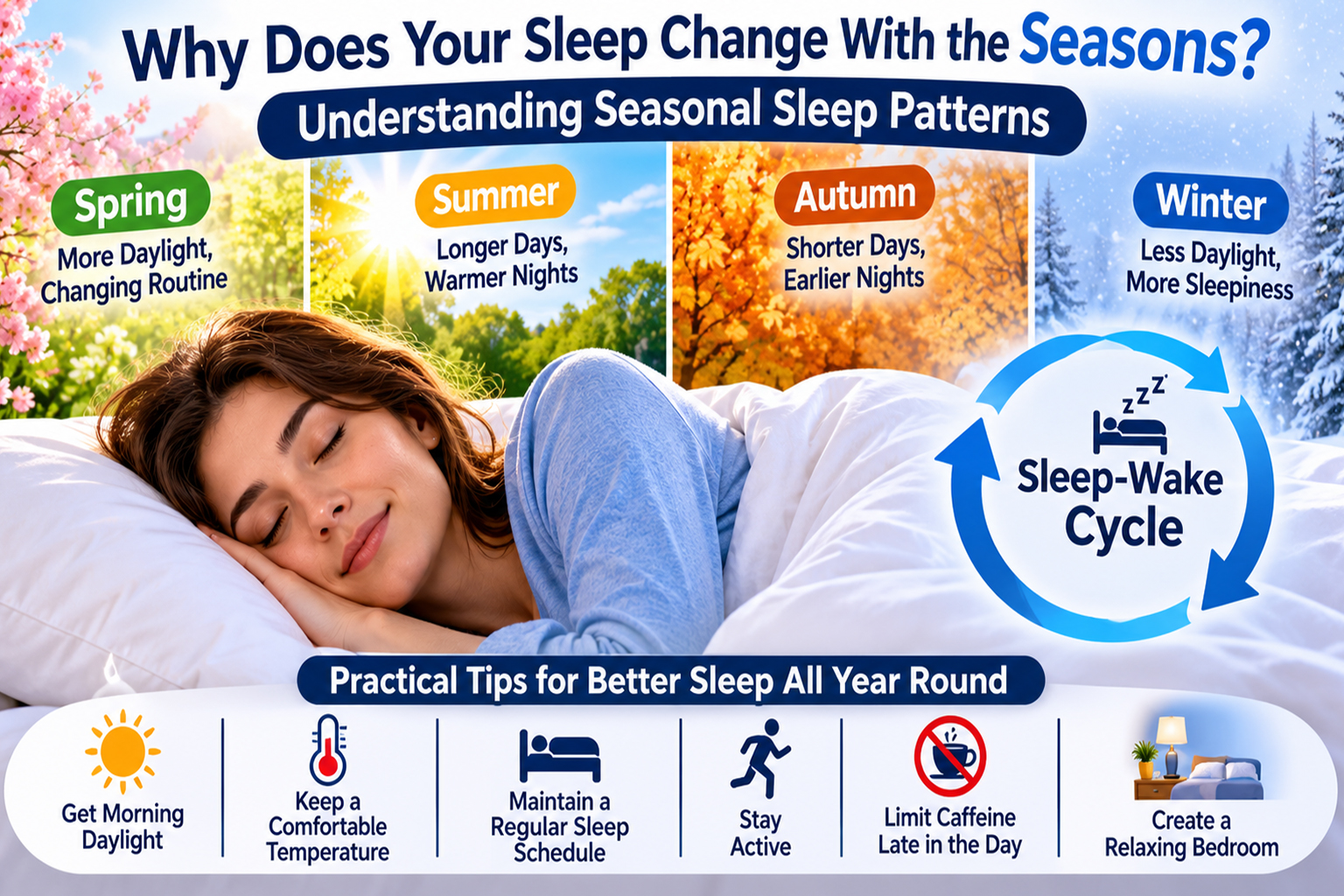
Have you ever noticed that your sleep habits seem to change during different times of the year? You may feel sleepier during colder months, find it harder to wake up on dark mornings or experience difficulty falling asleep during warm summer nights.
Seasonal changes can influence your sleep patterns, daily energy levels and bedtime habits. Changes in daylight hours, outdoor temperature, weather conditions and daily routines may affect the way your body regulates sleep and wakefulness.
Your body follows a natural internal clock that responds to environmental signals, especially light and darkness. When these signals change throughout the year, your sleep timing and sleep duration may also change.
Although seasonal sleep changes are often normal, understanding why they happen can help you adjust your daily habits and maintain a more consistent sleep schedule.
In this guide, we explore how different seasons may affect sleep, common seasonal sleep challenges and practical ways to support better sleep throughout the year.
What Are Seasonal Sleep Patterns?
Seasonal sleep patterns refer to changes in your sleep timing, duration or habits that may occur during different seasons of the year.
For example, some people may find that they:
- Feel sleepier during winter.
- Wake up earlier during summer.
- Struggle to fall asleep during warm nights.
- Experience changes in their energy levels.
- Find it harder to maintain a regular bedtime during seasonal transitions.
- Sleep for slightly longer during colder months.
These changes may be influenced by daylight exposure, temperature, personal routines, work schedules and other environmental factors.
Seasonal sleep changes are not the same for everyone. Your location, lifestyle, health, age and individual sleep needs can influence how you experience them.
1. How Daylight Hours Affect Your Sleep
Daylight is one of the most important environmental signals that helps regulate your body’s internal clock, also known as the circadian rhythm.
Your circadian rhythm follows an approximately 24-hour cycle and helps coordinate when you feel awake and when you feel sleepy.
During summer, daylight hours may be longer, with sunlight continuing into the evening. In winter, mornings may be darker and evenings may become dark much earlier.
These changes in light exposure can influence the timing of your body’s sleep-wake cycle.
Why Daylight Matters
- Morning daylight helps signal that it is time to wake up.
- Natural light supports the regulation of your circadian rhythm.
- Evening light may influence when your body begins preparing for sleep.
- Reduced daylight exposure may affect sleep timing and mood in some people.
Research suggests that seasonal changes in daylight exposure can influence sleep timing, although the extent of these changes varies between individuals and locations.
Practical Tips
- Spend some time outdoors during the morning.
- Open your curtains after waking up.
- Avoid spending the entire day in dim indoor lighting.
- Reduce bright light exposure before bedtime.
- Maintain a regular wake-up time throughout the year.
2. Why You May Feel Sleepier During Winter
Winter often brings shorter days, longer nights and colder weather. Some people notice that they feel more tired during winter or want to spend more time sleeping.
Reduced exposure to natural daylight may influence the circadian rhythm and may contribute to changes in sleep timing and mood.
Cold weather may also encourage people to spend more time indoors, reduce physical activity or change their daily routines.
Common Reasons for Winter Sleep Changes
- Reduced exposure to morning daylight.
- Darker mornings that make waking up feel more difficult.
- Changes in outdoor activity and exercise.
- Spending more time indoors.
- Changes in daily routines.
- Mood changes associated with seasonal conditions.
Feeling a little sleepier during winter does not necessarily mean something is wrong. However, persistent fatigue, low mood or excessive sleepiness should not automatically be attributed to the weather.
How to Support Better Sleep During Winter
- Try to get natural daylight during the morning.
- Maintain regular waking hours.
- Stay physically active.
- Keep your bedroom comfortably warm.
- Follow a relaxing bedtime routine.
- Avoid spending excessive time in bed during the day.
If you experience persistent low mood, loss of interest in activities or significant changes in sleep during winter, speak with your GP.
3. Why Summer Heat Can Make It Difficult to Sleep
Summer can create different sleep challenges. Longer daylight hours and warmer temperatures may make it harder for some people to fall asleep at their usual time.
Your body naturally undergoes temperature changes as part of the sleep process. An excessively warm bedroom may make it difficult to feel comfortable and may cause you to wake up during the night.
Hot weather can also increase discomfort, sweating and thirst.
Common Summer Sleep Problems
- Difficulty falling asleep because of heat.
- Waking up feeling sweaty or uncomfortable.
- Increased bedroom temperatures.
- Bright sunlight entering the room in the evening.
- Early morning sunlight disturbing sleep.
- Changes to bedtime due to outdoor activities.
Practical Tips for Better Summer Sleep
- Keep your bedroom as comfortably cool as possible.
- Use lightweight and breathable bedding.
- Wear comfortable, light nightwear.
- Use curtains or blinds to reduce unwanted sunlight.
- Improve ventilation when safe and practical.
- Avoid heavy meals close to bedtime.
- Stay hydrated throughout the day.
4. How Spring Can Change Your Sleep Routine
Spring often brings longer daylight hours, warmer temperatures and changes in daily activities.
As daylight increases, some people may notice changes in their waking times or bedtime habits. Morning sunlight may become more noticeable, while evenings may remain brighter for longer.
Spring can also be a time when people begin exercising more, spending time outdoors or changing their schedules.
Why Sleep May Change During Spring
- Increasing daylight hours.
- Earlier sunrise times.
- Changing outdoor temperatures.
- Increased outdoor activities.
- Changes to daily routines.
- Seasonal allergies that may interfere with sleep.
How to Maintain a Healthy Sleep Routine in Spring
- Keep your wake-up time consistent.
- Use curtains to control unwanted early morning light.
- Spend time outdoors during the day.
- Maintain regular exercise habits.
- Avoid allowing longer evenings to push your bedtime too late.
- Manage allergy symptoms with advice from a healthcare professional if they affect your sleep.
A regular sleep schedule can help you adjust to changes in daylight and daily activities.
5. Why Autumn May Affect Your Sleep
Autumn brings shorter daylight hours, cooler weather and earlier sunsets. These changes may influence when you feel sleepy and how you organise your daily routine.
Some people find it easier to sleep during cooler autumn nights, while others may notice changes in mood or energy levels as daylight decreases.
Common Autumn Sleep Changes
- Earlier sunset times.
- Cooler bedroom temperatures.
- Reduced daylight exposure.
- Changes in outdoor activity.
- A shift in bedtime habits.
- Increased tiredness during the day.
Practical Ways to Adjust
- Maintain a consistent bedtime and wake-up time.
- Get daylight during the morning.
- Keep your bedroom comfortable.
- Avoid excessive evening screen time.
- Continue regular physical activity.
- Prepare your bedtime routine before the weather becomes colder.
Adjusting your habits gradually can help you maintain a stable sleep schedule as the seasons change.
6. Seasonal Changes Can Affect Your Circadian Rhythm
Your circadian rhythm is the internal biological clock that helps regulate your sleep-wake cycle.
It responds to environmental signals, particularly light exposure. Seasonal changes in daylight can influence the timing of this rhythm.
For example, longer summer evenings may encourage later activities, while darker winter mornings may make waking up more difficult.
When your daily schedule changes frequently, your sleep timing may also become less consistent.
Signs Your Sleep-Wake Cycle May Be Changing
- Feeling sleepy earlier or later than usual.
- Difficulty waking up in the morning.
- Going to bed at different times every night.
- Feeling more alert during the evening.
- Changes in daytime energy levels.
- Sleeping longer during certain months.
How to Support Your Circadian Rhythm
- Wake up at approximately the same time every day.
- Get natural daylight during the morning.
- Avoid excessive bright light before bedtime.
- Maintain a consistent evening routine.
- Stay physically active during the day.
- Avoid frequently changing your sleeping schedule.
These habits can help provide your body with more predictable daily signals.
7. Can Seasonal Changes Affect Your Mood and Sleep?
Seasonal changes may influence mood, energy levels and sleep patterns in some people.
Reduced daylight exposure during winter has been associated with seasonal affective disorder (SAD), a type of depression linked to seasonal patterns. SAD can involve changes in mood, energy, sleep and appetite.
However, not everyone who feels tired during winter has SAD. Ordinary seasonal tiredness and a clinical condition are different.
Symptoms That May Need Attention
- Persistent low mood.
- Loss of interest in activities.
- Difficulty concentrating.
- Significant changes in sleeping habits.
- Feeling unusually tired for extended periods.
- Changes in appetite.
- Difficulty managing daily responsibilities.
If these symptoms persist or affect your everyday life, speak with your GP.
Seasonal changes can affect more than sleep alone, and professional support may be helpful when symptoms are significant.
8. Seasonal Allergies May Disrupt Your Sleep
Spring and summer can bring pollen and other seasonal allergens. For some people, allergy symptoms may make it harder to sleep comfortably.
Symptoms such as a blocked nose, sneezing, itchy eyes and congestion may interfere with relaxation and cause night-time discomfort.
How Allergies May Affect Sleep
- Nasal congestion may make breathing through your nose difficult.
- Itchy eyes may cause discomfort.
- Sneezing may interrupt sleep.
- Symptoms may worsen when pollen levels are high.
- Some allergy medicines may cause drowsiness or other side effects.
Tips to Manage Seasonal Allergy Discomfort
- Keep windows closed when pollen levels are high, if practical.
- Follow appropriate advice for managing allergy symptoms.
- Wash your face and change clothes after spending time outdoors.
- Keep bedding clean.
- Avoid bringing unnecessary pollen into your bedroom.
- Speak with a pharmacist or GP about suitable allergy treatment.
Some antihistamines can cause drowsiness, but they should not be used as routine sleep aids without appropriate medical advice.
9. Keep Your Sleep Schedule Consistent Throughout the Year
One of the most useful ways to manage seasonal sleep changes is to maintain a consistent sleep schedule.
Although daylight and temperatures change throughout the year, regular sleeping and waking times can help your body maintain a predictable routine.
Simple Habits for a Consistent Sleep Schedule
- Wake up at the same time every day.
- Go to bed when you feel sleepy.
- Allow enough time for sleep.
- Avoid excessive daytime naps.
- Get natural daylight during the day.
- Limit caffeine later in the day.
- Reduce bright light exposure in the evening.
- Avoid regularly sleeping much later at weekends.
Your schedule does not need to be perfect. The aim is to avoid unnecessary changes that make your sleeping pattern unpredictable.
10. Create a Sleep-Friendly Bedroom for Every Season
Your bedroom environment may need small adjustments as temperatures and daylight hours change.
The bedding that feels comfortable during winter may be too heavy for summer. Curtains that provide warmth during colder months may also help block early morning sunlight during warmer months.
Seasonal Bedroom Tips
| Season | Practical sleep adjustments |
|---|---|
| Spring | Manage allergy triggers, maintain regular sleep times and control morning light |
| Summer | Use breathable bedding, reduce bedroom heat and block unwanted sunlight |
| Autumn | Adjust bedding gradually, maintain morning daylight exposure and follow a routine |
| Winter | Keep the room comfortable, get daylight during the day and maintain regular waking hours |
A comfortable sleeping environment can help you adapt to seasonal changes without making unnecessary adjustments to your sleep schedule.
Example of a Simple Morning Routine for Better Sleep
You do not need to wake up at 5:00 am or follow a strict fitness schedule to build healthy morning habits.
Here is an example of a simple routine that you can adjust according to your lifestyle.
| Time | Morning activity |
|---|---|
| 6:30 am | Wake up and get out of bed |
| 6:35 am | Open curtains and drink water |
| 6:45 am | Spend time outdoors in natural daylight |
| 7:00 am | Go for a short walk or do gentle stretching |
| 7:30 am | Have a balanced breakfast |
| 8:00 am | Prepare for work or daily activities |
These times are only an example. You can move the schedule earlier or later depending on your work, family responsibilities and natural sleep needs.
The key is to follow a reasonably consistent pattern.
Common Mistakes That May Affect Seasonal Sleep
| Common mistake | Better approach |
|---|---|
| Staying in bed much longer during winter | Maintain a reasonably consistent wake-up time |
| Sleeping too late during summer | Keep your sleep schedule regular |
| Keeping the bedroom too warm | Adjust bedding and ventilation |
| Ignoring morning daylight | Spend time outdoors during the day |
| Staying up late because of longer evenings | Follow your usual bedtime routine |
| Using heavy bedding during hot weather | Choose lightweight, breathable bedding |
| Ignoring persistent fatigue | Speak with a GP if symptoms continue |
Frequently Asked Questions
1. Why does my sleep change with the seasons?
Seasonal changes in daylight, temperature, weather and daily routines may influence your circadian rhythm and sleep habits. Some people sleep longer during winter, while others notice changes in bedtime or waking time.
2. Do people sleep more during winter?
Some studies have observed slightly longer sleep during winter months, although the changes vary depending on location, lifestyle, age and other factors. It is not a universal pattern.
3. Why do I feel more tired during winter?
Reduced daylight exposure, changes in daily activities, sleep timing and mood may contribute to winter tiredness. Persistent or excessive fatigue should be discussed with a healthcare professional.
4. Does hot weather affect sleep?
Yes. Warm bedroom temperatures may make it harder to fall asleep or stay asleep comfortably. Adjusting ventilation, bedding and room temperature may help.
5. Can daylight affect my sleep schedule?
Yes. Natural daylight is an important signal for your circadian rhythm. Morning light can help regulate your body’s internal clock and support a more consistent sleep-wake pattern.
6. Why do I wake up earlier during summer?
Earlier sunrise times and increased morning light may cause some people to wake earlier than usual. Blackout curtains or blinds may help reduce unwanted morning light.
7. Can seasonal changes cause insomnia?
Seasonal changes may influence sleep timing and habits, but insomnia can have many causes. If you regularly struggle to fall asleep or stay asleep, consult a healthcare professional.
8. How can I maintain better sleep throughout the year?
Maintain regular sleeping and waking times, get daylight during the day, exercise regularly, manage your bedroom temperature and follow a relaxing bedtime routine.
Conclusion
Your sleep patterns can change throughout the year because of differences in daylight, temperature, weather, daily activities and routines. Some people may feel sleepier during winter, while others experience sleep disruptions during hot summer nights.
Understanding these seasonal influences can help you make simple adjustments to your sleeping habits. Maintaining a consistent wake-up time, getting natural daylight, staying active and keeping your bedroom comfortable can support better sleep throughout the year.
Rather than trying to completely change your sleep schedule every season, focus on maintaining healthy habits and adjusting your environment when necessary.
Small, consistent changes can help you create a more comfortable sleeping routine, regardless of the season.
Disclaimer: This article is for general educational purposes only and does not replace professional medical advice, diagnosis or treatment. If you experience persistent sleep problems, mood changes or excessive daytime tiredness, consult a qualified healthcare professional.