Buy Sleeping Pills UK –
Have you ever woken up in the morning feeling confused, tired and unable to concentrate, even after sleeping for several hours? You may find it difficult to get out of bed, remember what you were doing or feel fully alert during the first part of your morning.
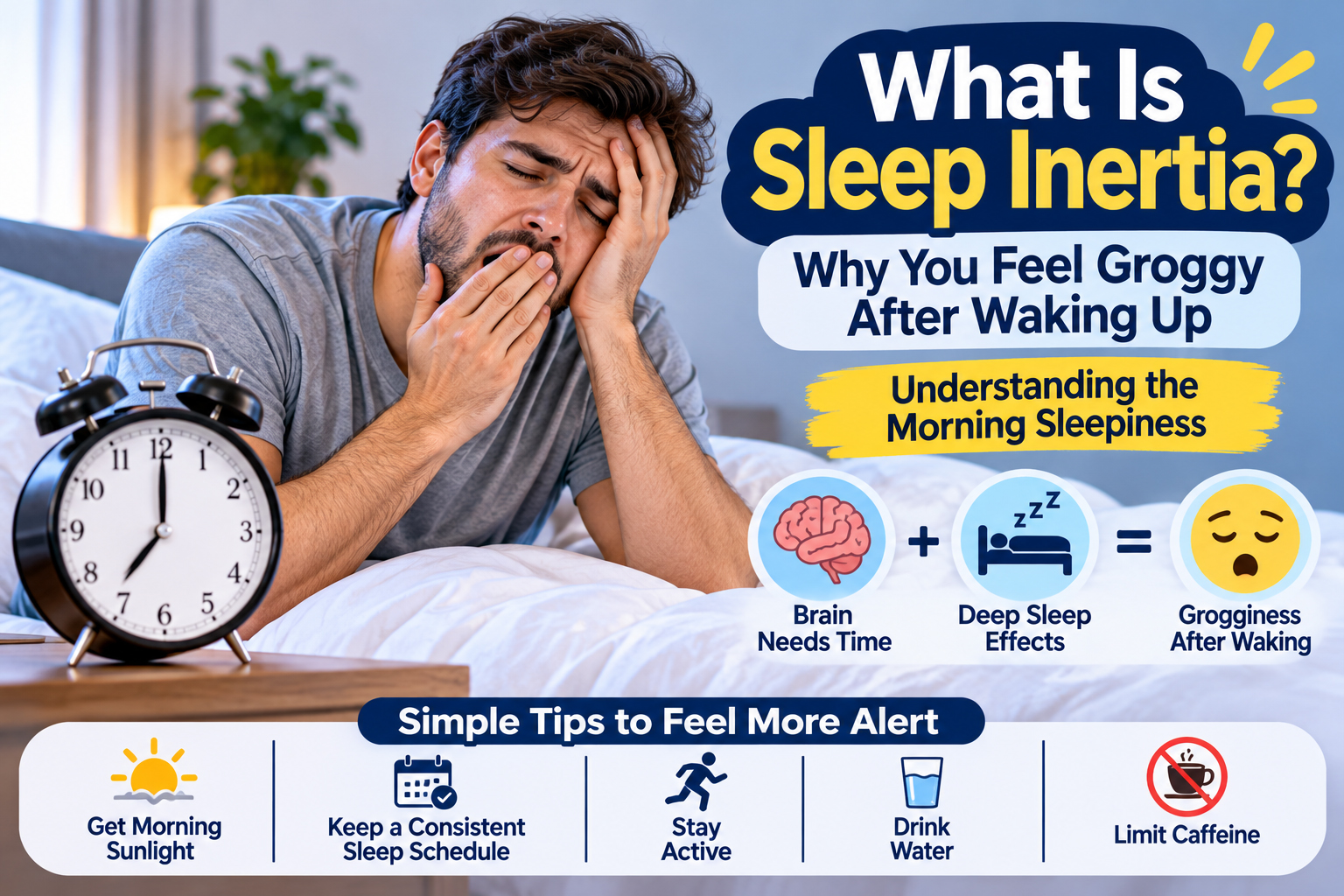
This temporary feeling is known as sleep inertia. It is the transitional period between sleeping and being fully awake, during which your brain and body gradually become more alert.
Sleep inertia is common and can happen after waking up from a nighttime sleep or a daytime nap. For some people, it lasts only a few minutes, while others may experience grogginess for longer.
Although sleep inertia is generally a normal part of waking up, certain factors such as insufficient sleep, irregular sleep schedules and waking at an unfavourable time may make it more noticeable.
In this guide, we explain what sleep inertia is, why you feel groggy after waking up, how long it can last and practical ways to reduce morning sluggishness.
What Is Sleep Inertia?
Sleep inertia is a temporary state of reduced alertness that occurs immediately after waking up. During this period, your brain transitions from a sleeping state to a fully awake state.
Although you may be awake physically, your mental alertness, concentration, memory and reaction time may take longer to return to normal.
Common experiences associated with sleep inertia include:
- Feeling sleepy even after waking up.
- Difficulty concentrating on simple tasks.
- Feeling mentally slow or confused.
- Struggling to get out of bed.
- Reduced motivation in the morning.
- Forgetting things temporarily.
- Taking longer to react to situations.
- Wanting to go back to sleep.
Sleep inertia can happen to almost anyone. It does not necessarily mean that you have a sleep disorder or that your sleep was poor.
However, if morning grogginess is severe, persistent or affects your everyday activities, it may be worth discussing it with a healthcare professional.
Why Do You Feel Groggy After Waking Up?
Sleep inertia happens because waking up is a gradual biological process rather than an instant change from sleeping to being fully alert.
During sleep, your brain and body undergo different processes that support rest, recovery and memory. When you wake up, these processes do not necessarily switch off immediately.
Several factors may contribute to sleep inertia.
1. Your Brain Takes Time to Become Fully Alert
When you wake up, different areas of your brain transition into a waking state at different rates. Your body may be awake, but some cognitive functions, such as attention, decision-making and reaction time, may temporarily remain less efficient.
This is why you may feel mentally foggy during the first few minutes after getting out of bed.
Your alertness generally improves as you spend more time awake.
2. Waking Up During Deep Sleep May Increase Grogginess
Sleep consists of different stages, including lighter sleep, deeper non-REM sleep and REM sleep.
The stage of sleep from which you wake may influence how groggy you feel. Research suggests that waking from deeper sleep may be associated with more noticeable sleep inertia.
This does not mean that deep sleep is unhealthy. Deep sleep is an important part of normal sleep. The grogginess is related to the transition from sleep to wakefulness.
3. Not Getting Enough Sleep Can Make Sleep Inertia Worse
Sleep deprivation is one of the factors that may increase the intensity of sleep inertia.
If you regularly stay up late, wake up too early or have interrupted sleep, your body may accumulate sleep debt. When you finally wake up, you may experience stronger feelings of tiredness and reduced alertness.
Getting sufficient sleep consistently may help reduce the effects of sleep inertia.
4. Your Body Clock May Influence Morning Grogginess
Your circadian rhythm is your body’s internal clock that helps regulate sleep and wakefulness over approximately 24 hours.
If you wake up at a time that does not align well with your natural sleep-wake rhythm, you may feel more groggy.
This can happen when you:
- Work night shifts.
- Frequently change your sleep schedule.
- Stay up late and wake up early.
- Travel across time zones.
- Sleep at irregular times during the week.
Maintaining a consistent sleep schedule can help support your body’s natural rhythm.
5. Sleep Inertia Can Happen After Napping
Sleep inertia is not limited to waking up in the morning. It can also happen after a daytime nap.
If you take a longer nap, you may enter deeper sleep. Waking from deeper sleep may leave you feeling sluggish or disoriented for a short period.
This is one reason why some people feel worse immediately after a nap rather than refreshed.
Shorter naps may be less likely to cause pronounced grogginess for some people, although individual responses vary.
How Long Does Sleep Inertia Last?
Sleep inertia usually improves as you become more alert after waking up.
For many people, the effects last approximately 15 to 30 minutes, although some studies and guidance report durations of around 30 to 60 minutes or occasionally longer.
The duration may depend on several factors, including:
- How much sleep you had.
- Whether you woke up during deeper sleep.
- The time of day you woke up.
- Your usual sleep schedule.
- Whether you have been experiencing sleep deprivation.
- Individual differences in sleep and alertness.
Occasional morning grogginess is generally not a cause for concern. However, if you regularly feel extremely sleepy for hours after waking, or if you struggle to remain awake during the day, speak with your GP.
Common Symptoms of Sleep Inertia
Sleep inertia can affect both physical and mental alertness.
| Symptom | What you may experience |
|---|---|
| Morning grogginess | Feeling sleepy and sluggish after waking |
| Brain fog | Difficulty thinking clearly |
| Poor concentration | Struggling to focus on tasks |
| Slow reaction time | Taking longer to respond |
| Disorientation | Feeling confused immediately after waking |
| Low motivation | Finding it difficult to get out of bed |
| Memory difficulties | Temporarily struggling to remember information |
| Sleepiness | Feeling the need to return to sleep |
These symptoms usually improve as the body becomes more alert.
7 Practical Ways to Reduce Sleep Inertia
Although you cannot always prevent sleep inertia completely, certain habits may help you feel more alert after waking up.
1. Maintain a Consistent Sleep Schedule
Going to bed and waking up at approximately the same time every day may help support your circadian rhythm.
Frequently changing your sleeping times can make it harder for your body to establish a predictable sleep-wake pattern.
Try to:
- Wake up at a consistent time.
- Avoid frequently changing your schedule on weekends.
- Go to bed when you feel sleepy.
- Allow enough time for sleep.
- Avoid regularly staying up late.
A regular schedule can help your body become accustomed to a predictable routine.
2. Get Natural Daylight After Waking Up
Natural daylight is an important signal for your circadian rhythm. Morning light exposure can help your body recognise that the day has started and support your natural sleep-wake cycle.
Try these simple habits:
- Open your curtains after waking.
- Spend some time outdoors in the morning.
- Take a short walk.
- Have breakfast near a naturally lit window.
- Avoid staying in a dark room for several hours after waking.
You do not need to look directly at the sun. Enjoy daylight safely.
3. Get Out of Bed and Move Gently
Remaining in bed after waking may make it easier to return to sleep, particularly if you already feel groggy.
Gentle physical movement can help you begin your day and increase your sense of alertness.
Consider:
- Stretching your arms and legs.
- Walking around your home.
- Doing light yoga.
- Taking a short walk outdoors.
- Performing simple mobility exercises.
You do not need an intense workout immediately after waking. Gentle movement is a practical starting point.
4. Drink Water After Waking Up
Having a glass of water in the morning is a simple way to begin your hydration routine.
Although water is not a treatment for sleep inertia, maintaining normal hydration can support overall health and may help you feel more comfortable after waking.
Try to:
- Keep water near your morning routine.
- Drink water after getting out of bed.
- Stay hydrated throughout the day.
- Avoid excessive fluid intake immediately before bedtime if it causes night-time waking.
5. Avoid Repeatedly Pressing the Snooze Button
Repeatedly pressing the snooze button may interrupt your morning routine and encourage you to return to sleep for short periods.
Instead of snoozing several times, try setting your alarm for a realistic waking time and getting out of bed when it rings.
If you regularly struggle to wake up, consider whether you are getting enough sleep or going to bed too late.
6. Avoid Relying on Excessive Caffeine
Coffee and tea can help increase alertness because caffeine affects the brain’s sleepiness-related signalling.
However, excessive caffeine consumption can interfere with sleep later in the day, potentially creating a cycle of poor sleep and morning tiredness.
Try to:
- Keep your caffeine intake moderate.
- Avoid drinking caffeine too late in the day.
- Do not rely on multiple cups of coffee to compensate for insufficient sleep.
- Consider decaffeinated drinks if you want to reduce your intake.
Improving your night-time sleep is generally more helpful than relying on caffeine to overcome persistent tiredness.
7. Allow Yourself Time to Become Fully Awake
Sleep inertia can temporarily affect concentration and reaction time. It is important to give yourself time to become fully alert before performing activities that require careful attention.
If you feel particularly groggy:
- Avoid rushing into demanding tasks.
- Take a few minutes to wake up gradually.
- Get daylight.
- Move gently.
- Avoid driving or operating machinery until you feel sufficiently alert.
This is particularly important for people who work in safety-sensitive jobs or need to make important decisions shortly after waking.
Sleep Inertia vs. Excessive Daytime Sleepiness
Sleep inertia and excessive daytime sleepiness are related to feeling tired, but they are not the same thing.
| Sleep inertia | Excessive daytime sleepiness |
|---|---|
| Occurs mainly immediately after waking | May occur throughout the day |
| Usually improves as you become fully awake | May continue despite being awake for several hours |
| Often temporary | May be persistent or recurrent |
| Can occur in otherwise healthy people | May be associated with insufficient sleep, medication or sleep disorders |
| Usually improves with time awake | May require medical assessment if persistent |
If you experience excessive sleepiness during the day, particularly when driving or working, seek medical advice.
When Should You Seek Medical Advice?
Occasional morning grogginess is common. However, persistent or severe sleep inertia may sometimes be associated with insufficient sleep, sleep disorders, medication effects or other health conditions.
Consider speaking with your GP if you:
- Regularly struggle to wake up despite getting enough sleep.
- Feel extremely sleepy throughout the day.
- Experience prolonged confusion after waking.
- Have difficulty concentrating or functioning at work.
- Regularly fall asleep during daytime activities.
- Experience loud snoring, gasping or pauses in breathing during sleep.
- Have persistent sleep difficulties.
A healthcare professional can help assess possible causes and recommend appropriate treatment or further investigation.
Do not stop prescribed medicines without speaking to your healthcare professional, particularly if you think they may be contributing to morning grogginess.
Frequently Asked Questions
1. What is sleep inertia in simple terms?
Sleep inertia is the temporary groggy, sleepy or confused feeling you experience immediately after waking up. It happens while your brain and body transition from sleeping to being fully awake.
2. Is sleep inertia normal?
Yes. Sleep inertia is a common experience and can happen after waking up from a night of sleep or a nap. It usually improves as you become more alert.
3. How long does sleep inertia last?
For many people, sleep inertia lasts approximately 15 to 30 minutes, but it may last longer depending on sleep deprivation, sleep timing and individual factors.
4. Why do I feel groggy even after eight hours of sleep?
You may experience sleep inertia even after a full night’s sleep. Waking during deeper sleep, your circadian rhythm, sleep quality and individual differences may contribute to morning grogginess.
5. Can sleep inertia happen after a nap?
Yes. Sleep inertia can occur after daytime naps, especially when you wake up from deeper sleep. Longer naps may increase the chance of waking up feeling groggy for some people.
6. Does caffeine help with sleep inertia?
Caffeine may temporarily increase alertness and reduce some effects of sleep inertia. However, excessive or late-day caffeine may interfere with your night-time sleep.
7. Can sleep inertia affect concentration?
Yes. Sleep inertia may temporarily affect attention, memory, reaction time and decision-making. These effects generally improve as you become fully awake.
8. Is sleep inertia the same as insomnia?
No. Sleep inertia refers to temporary grogginess after waking. Insomnia involves difficulty falling asleep, staying asleep or waking earlier than desired, often with daytime consequences.
Conclusion
Sleep inertia is the temporary feeling of grogginess, confusion and reduced alertness that many people experience after waking up. It is a normal part of the transition from sleep to wakefulness and usually improves as you become more alert.
Factors such as insufficient sleep, irregular sleep schedules, waking during deeper sleep and your body’s internal clock may influence how strongly you experience it.
Maintaining a consistent sleep schedule, getting natural daylight, moving gently in the morning and allowing yourself time to wake up can help support better morning alertness.
If morning grogginess becomes severe, lasts unusually long or affects your everyday activities, consider speaking with a healthcare professional.
Disclaimer: This article is for general educational purposes only and does not replace professional medical advice, diagnosis or treatment. If you experience persistent sleep problems or excessive daytime sleepiness, consult a qualified healthcare professional.