Buy Sleeping Pills UK –
Tramadol is a prescription opioid painkiller used in the UK to treat moderate to severe pain. It is available in several forms and strengths, including standard 50mg tablets and capsules. Because tramadol is an opioid medicine, it can be useful in appropriate clinical situations but also comes with important safety considerations.
People taking tramadol may experience side effects such as nausea, dizziness, tiredness or drowsiness. There are also important considerations when tramadol is taken alongside certain medicines, particularly some antidepressants and other painkillers.
This guide explains what tramadol 50mg is, what it is generally prescribed for, common side effects, important interactions and the risks associated with longer-term use.
Important: This article provides general health information and is not a substitute for advice from a GP, pharmacist or other qualified healthcare professional.
What Is Tramadol 50mg?
Tramadol is an opioid painkiller that affects the way the brain and nervous system process pain.
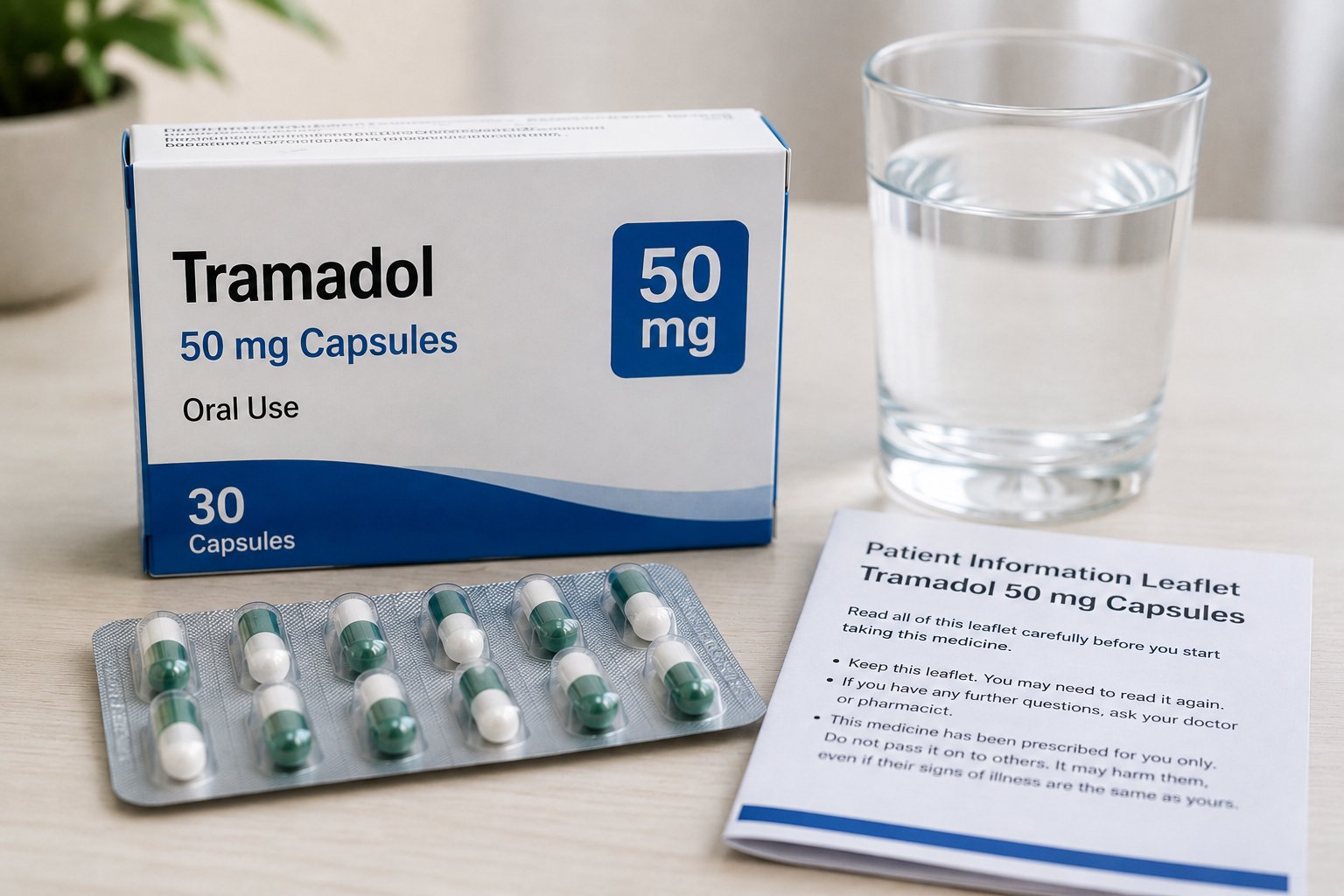
The medicine is available in different formulations. NHS information lists 50mg as a standard tablet and capsule strength, while slow-release formulations are available in several other strengths.
Tramadol is available only on prescription in the UK. It may be prescribed when a healthcare professional considers opioid pain relief appropriate.
The correct medicine and strength depend on the individual’s condition, medical history and other medicines.
What Is Tramadol 50mg Used For?
Tramadol is used to treat moderate to severe pain.
Depending on the circumstances, it may be considered for pain that has not been adequately controlled with weaker painkillers.
The underlying cause of pain is important when deciding on treatment. Tramadol should not simply be viewed as a stronger alternative for every type of pain.
If pain continues or becomes worse while taking prescribed treatment, speak to your doctor rather than changing the amount yourself.
How Does Tramadol Work?
Tramadol belongs to a group of medicines called opioids.
It acts on pain receptors in the central nervous system and changes how pain signals are processed by the brain. NHS information also notes that tramadol has additional effects involving certain chemical messengers in the nervous system.
This means tramadol is different from medicines such as paracetamol or ibuprofen.
How Quickly Does Tramadol 50mg Work?
Standard tramadol generally starts working within 30 to 60 minutes.
The duration and onset can vary depending on the formulation. Slow-release versions are designed differently and can take longer to reach their full effect.
Patients should follow the instructions supplied with their particular medicine rather than assuming that all tramadol products work in the same way.
Common Tramadol 50mg Side Effects
Like all medicines, tramadol can cause side effects, although not everyone experiences them.
Common side effects include:
Feeling Sleepy or Tired
Tramadol can make some people feel sleepy, tired or dizzy.
This may be particularly noticeable when treatment is first started.
Dizziness
Dizziness or feeling “spaced out” can occur.
If you feel dizzy, avoid activities where reduced concentration or coordination could put you or someone else at risk.
Nausea or Vomiting
Feeling sick is another commonly reported side effect.
Taking the medicine exactly as directed and following your pharmacist’s advice may help manage this.
Headache
Some people experience headaches while taking tramadol.
If headaches are persistent or severe, speak with your healthcare professional.
Low Energy
Some people may experience reduced energy while taking tramadol.
If this continues or affects your daily activities, discuss it with your doctor or pharmacist.
NHS guidance identifies headache, sleepiness, tiredness, dizziness, nausea and vomiting among common side effects.
Can Tramadol Cause Dependence?
Yes.
Tramadol is an opioid, and dependence and addiction are recognised risks, particularly with prolonged use.
UK medicines safety guidance states that prolonged opioid use can lead to tolerance and dependence, and some people may develop addiction even when opioids are taken at therapeutic doses.
Possible warning signs include:
- Feeling that you need more medicine
- Craving the medicine
- Taking more than prescribed
- Taking the medicine for reasons other than pain
- Experiencing withdrawal symptoms when treatment is stopped
If you are concerned about dependence, speak with your GP or pharmacist rather than stopping treatment suddenly.
Tramadol 50mg and Long-Term Use
Some people with significant pain may require longer-term treatment, but this needs regular medical review.
With prolonged opioid treatment, the body can develop tolerance, meaning the medicine may become less effective over time.
Some people can also develop hyperalgesia, where they become more sensitive to pain. NHS guidance recommends discussing these concerns with your doctor if tramadol is being used for a longer period.
If tramadol is no longer controlling your pain as it previously did, do not increase the dose yourself.
Tramadol 50mg and Other Medicines
One of the most important aspects of tramadol safety is checking for interactions with other medicines.
Tell your doctor or pharmacist about everything you take, including:
- Prescription medicines
- Pharmacy medicines
- Over-the-counter medicines
- Antidepressants
- Sleeping medicines
- Anxiety medicines
- Other painkillers
- Herbal remedies
- Vitamins and supplements
Some antidepressants can interact with tramadol and increase the risk of serious side effects.
NHS guidance specifically warns about interactions with certain antidepressants and says MAOIs should not be taken with tramadol.
Can You Take Tramadol With Codeine?
This is an important safety point for patients who use different pain medicines.
NHS guidance advises not to take medicines containing codeine with tramadol, because the combination can increase the likelihood of side effects. Co-codamol is one example of a medicine that contains codeine.
Do not combine opioid pain medicines unless your prescriber or pharmacist has specifically advised you to do so.
Tramadol and Alcohol
Alcohol can increase the sedative effects of tramadol.
Combining them can increase the likelihood of:
- Sleepiness
- Dizziness
- Reduced alertness
- Other serious side effects
NHS guidance advises avoiding alcohol with tramadol because it can make you more sleepy and increase the risk of serious side effects.
If you are unsure about alcohol while taking tramadol, ask your pharmacist or doctor.
Can You Drive While Taking Tramadol 50mg?
Tramadol can affect alertness and coordination.
Do not drive, cycle or use machinery if tramadol makes you:
- Sleepy
- Dizzy
- Clumsy
- Unable to concentrate
- Unable to make decisions properly
- Experience blurred vision
NHS guidance also highlights that driving may be affected when starting tramadol or when another medicine is added to treatment.
If you are uncertain whether you are fit to drive, do not drive and seek professional advice.
Who May Need Extra Advice Before Taking Tramadol?
Tramadol may not be suitable for everyone.
Before treatment, tell your doctor or pharmacist if you:
- Have experienced seizures or fits
- Have breathing problems
- Have kidney or liver problems
- Have had a head injury
- Have had problems with strong painkillers
- Have a history of alcohol or drug dependence
- Are pregnant or breastfeeding
- Take medicines for depression or other mental health conditions
These factors can affect whether tramadol is appropriate and how treatment should be managed.
What Happens If You Take Too Much Tramadol?
Taking more tramadol than prescribed can be dangerous.
Possible symptoms of taking too much include:
- Severe sleepiness
- Nausea
- Dizziness
- Difficulty breathing
- Loss of consciousness
The amount that can cause an overdose varies between people.
NHS guidance recommends seeking urgent medical advice after taking too much tramadol, with specific advice depending on how many additional doses have been taken.
If someone develops breathing difficulties, a seizure or becomes unconscious, call 999 immediately.
Do Not Stop Tramadol Suddenly
If you have been taking tramadol regularly for several weeks or longer, stopping suddenly can cause withdrawal symptoms.
These can include:
- Anxiety
- Agitation
- Sweating
- Shaking
- Difficulty sleeping
- Nausea
- Body aches
UK opioid safety guidance recommends gradual reduction where appropriate rather than suddenly stopping long-term opioid treatment.
If you want to stop taking tramadol, speak with your doctor first.
Tramadol 50mg Safety Tips
If you have been prescribed tramadol:
- Follow your prescription instructions carefully.
- Do not take an extra dose because your pain has increased.
- Do not share your medicine.
- Avoid alcohol unless your healthcare professional advises otherwise.
- Check with a pharmacist before taking other medicines.
- Do not combine it with codeine-containing medicines unless professionally advised.
- Do not drive if the medicine affects your alertness.
- Keep medicines safely away from children.
- Speak to your doctor before stopping regular treatment.
GOV.UK guidance emphasises taking opioid medicines only as directed and not taking additional opioid medicines to “top up” pain relief.
When Should You Speak to a Doctor?
Contact your doctor or pharmacist if:
- Your pain is not improving.
- Tramadol appears less effective than before.
- Side effects are persistent.
- You are worried about dependence.
- You want to stop taking tramadol.
- You are taking another medicine and are unsure about interactions.
- You are experiencing unusual symptoms.
For serious symptoms such as breathing difficulties or a seizure, seek emergency medical assistance.
Tramadol 50mg: Key Points to Remember
Tramadol 50mg is a prescription opioid used for moderate to severe pain.
The most important points are:
- It is available in standard 50mg tablets and capsules.
- It can cause sleepiness, dizziness and nausea.
- Alcohol can increase its sedative effects.
- It can interact with several medicines.
- Codeine-containing medicines should not be combined with tramadol unless advised by a healthcare professional.
- Long-term use can result in tolerance and dependence.
- Do not increase the dose or stop regular treatment without professional advice.
FAQ
What is tramadol 50mg used for?
Tramadol 50mg is a prescription opioid painkiller that may be used to treat moderate to severe pain.
How long does tramadol 50mg take to work?
Standard tramadol generally starts working within around 30 to 60 minutes, although this can vary depending on the formulation and individual circumstances.
What are the common side effects of tramadol 50mg?
Common side effects include sleepiness, tiredness, dizziness, nausea or vomiting and headaches.
Can tramadol 50mg cause dependence?
Yes. Tramadol is an opioid and prolonged use can lead to tolerance and dependence. Some people can also develop addiction.
Can you take tramadol with codeine?
NHS guidance advises against taking codeine-containing medicines with tramadol because this can increase the risk of side effects.
Can you drink alcohol while taking tramadol?
Alcohol can increase sleepiness and the risk of serious side effects. NHS advice recommends avoiding alcohol while taking tramadol.
Conclusion
Tramadol 50mg can have an important role in managing moderate to severe pain when prescribed appropriately. However, as an opioid medicine, it requires careful use and regular consideration of its potential risks.
Understanding common side effects, medicine interactions, alcohol precautions, driving considerations and the possibility of dependence can help patients use their prescribed treatment more safely.
If tramadol is not controlling your pain, is causing troublesome side effects or you are concerned about becoming dependent on it, speak with your GP, pharmacist or prescribing healthcare professional rather than changing your treatment yourself.