Buy Sleeping Pills UK –
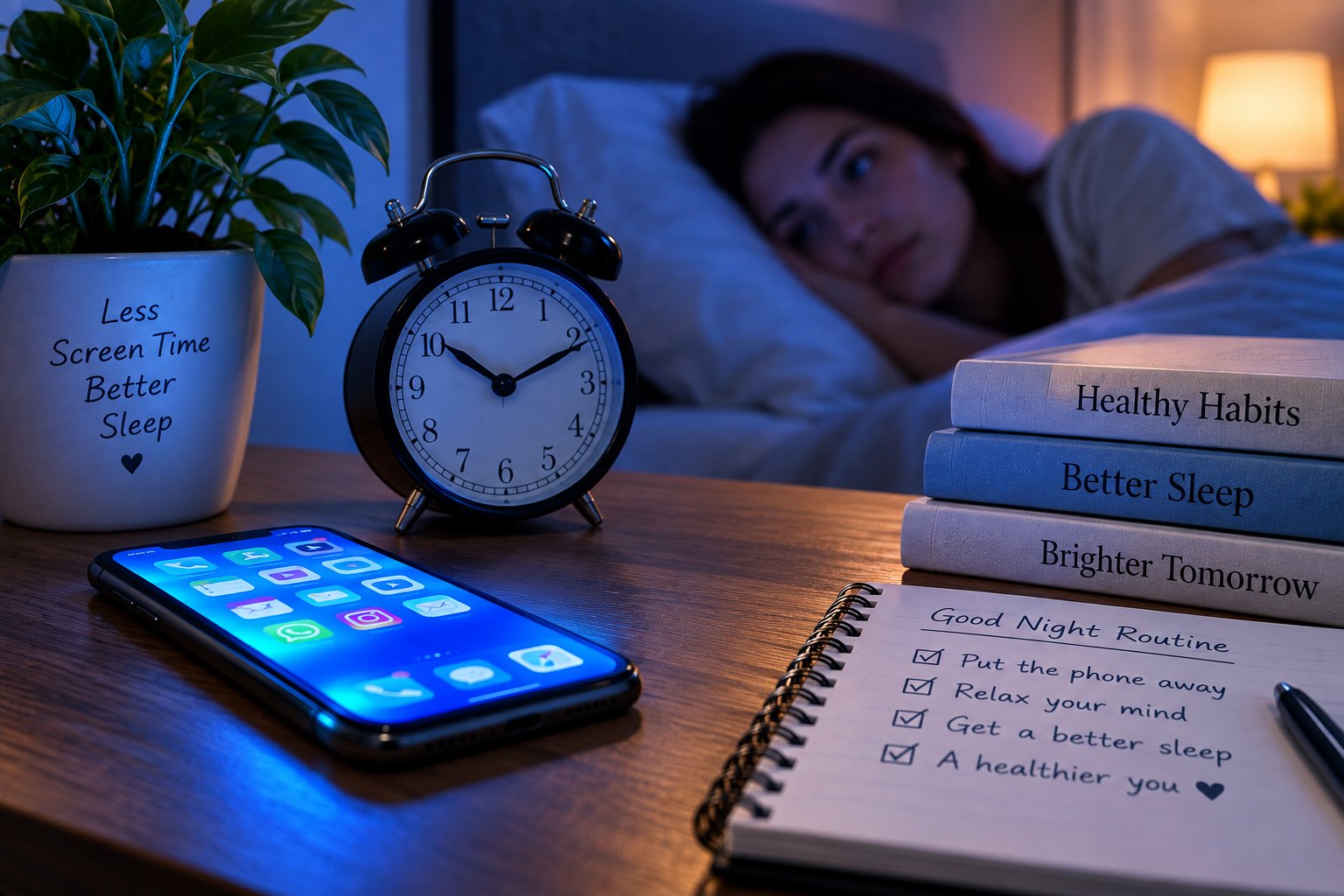
Smartphones, tablets, laptops and televisions have become part of everyday life. We use them for work, entertainment, communication and relaxation. But using screens late at night can sometimes make it harder to fall asleep.
One reason is light exposure, particularly short-wavelength light often described as blue light. Light in this part of the spectrum can influence the body’s internal clock and affect the timing of melatonin, a hormone involved in regulating the sleep-wake cycle.
However, blue light is not the only issue. Using a phone or tablet before bed can also keep your mind active, delay your bedtime and expose you to stimulating content or notifications. Research reviewing electronic media use has found an association between greater screen use and poorer sleep outcomes, although the relationship is influenced by several factors.
This guide explains how blue light may affect sleep and provides practical ways to reduce the impact of evening screen use.
What Is Blue Light?
Blue light is a part of the visible light spectrum. It is naturally present in daylight and plays an important role in helping us stay alert during the daytime.
Our eyes contain specialised cells that respond to light and send signals to the brain’s circadian system. Short-wavelength light is particularly effective at influencing this system.
Blue-enriched light can come from:
- Smartphones
- Tablets
- Computer monitors
- Televisions
- LED lighting
- Other electronic displays
It is important to remember that blue light is not inherently harmful. Daytime exposure to natural light is an important part of normal circadian timing.
The concern is primarily about bright or stimulating light exposure during the evening, when the body would normally be preparing for sleep.
How Does Blue Light Affect Sleep?
Blue light can affect sleep in several ways.
1. It Can Influence Melatonin
Melatonin is a hormone that helps signal to your body that it is time to prepare for sleep.
Exposure to light in the evening can suppress or delay melatonin production, particularly when the light contains wavelengths to which the circadian system is highly sensitive.
This can potentially make you feel more alert when you would normally be becoming sleepy.
2. It Can Make Falling Asleep More Difficult
Using a bright screen shortly before bed may delay the natural transition towards sleep.
The NHS specifically advises people experiencing insomnia not to use smartphones and other devices right before bed because the blue light can make you more awake.
This does not mean that everyone who looks at a phone before bed will develop insomnia. Individual responses vary.
3. Screen Use Can Delay Bedtime
The problem with screens is not necessarily just the light.
It is easy to intend to spend five minutes checking your phone and end up scrolling for much longer.
This can result in:
More screen time → later bedtime → less time available for sleep
Research on electronic media use suggests that screen use can affect sleep through several pathways, including delaying bedtime, disrupting sleep and increasing mental or emotional stimulation.
4. Screen Content Can Keep Your Brain Active
Consider the difference between:
Reading a relaxing book on a quiet evening
and
Watching an exciting film, replying to work messages or scrolling through stressful news
Both involve screens, but the mental stimulation can be very different.
Notifications, social media, games, emotionally intense content and work-related messages can make it harder to switch from an active state to a relaxed bedtime state.
This is why reducing screen use can be helpful even when blue-light exposure itself is not the only concern.
Is Blue Light the Only Reason Screens Affect Sleep?
No.
It is easy to think that the entire problem is simply “blue light”, but sleep and screen use are more complicated.
Several factors may contribute:
Light exposure
Evening light can affect circadian timing and melatonin.
Mental stimulation
Games, social media, work and emotionally engaging content can keep the brain active.
Notifications
Sounds, vibrations and alerts can interrupt relaxation or sleep.
Delayed bedtime
People may continue using devices instead of going to bed.
Poor sleep routine
Irregular bedtimes and wake-up times can make sleep more difficult.
Research on electronic media supports the idea that these factors can work together rather than screen light being the only explanation.
How Much Screen Time Before Bed Is Too Much?
There is no universal number of minutes that is automatically “too much” for every adult.
Instead of focusing exclusively on a precise number, consider when you use screens, what you are doing on them and whether your sleep is being affected.
The NHS recommends trying not to use phones, tablets or computers for about one hour before bed as part of good sleep hygiene.
For example, if you normally go to bed at 11pm, you could aim to reduce or stop recreational screen use from around 10pm.
This can also give you time to relax and prepare for sleep.
What Is the Best Time to Stop Using Your Phone Before Bed?
A practical starting point is approximately one hour before bedtime.
For example:
| Bedtime | Try reducing screen use from |
|---|---|
| 9:00 pm | 8:00 pm |
| 10:00 pm | 9:00 pm |
| 11:00 pm | 10:00 pm |
| Midnight | 11:00 pm |
This is a sleep-hygiene guideline rather than a strict medical rule.
If you notice that you remain alert after using your phone late at night, you could experiment with stopping earlier.
7 Ways to Reduce the Effect of Screens on Sleep
1. Create a Screen-Free Wind-Down Period
Try making the final part of your evening screen-free.
Instead of scrolling through your phone, you could:
- Read a physical book
- Listen to relaxing music
- Practise breathing exercises
- Take a warm bath or shower
- Prepare for the following day
- Do gentle stretching
The NHS recommends relaxing for at least an hour before bed when dealing with insomnia.
2. Keep Your Phone Away From Your Bed
If your phone is next to your pillow, it can be tempting to check it repeatedly.
Try placing it:
- On a bedside table away from the bed
- Across the room
- On a charging station outside the bedroom, if practical
You can also use a separate alarm clock if checking your phone is part of your bedtime routine.
3. Turn Off Unnecessary Notifications
Notifications can encourage you to pick up your phone even when you are ready for bed.
Consider using:
- Do Not Disturb
- Sleep mode
- Silent mode
- Scheduled notification settings
This can reduce interruptions without requiring you to stop using your phone completely.
4. Reduce Screen Brightness in the Evening
A very bright screen in a dark bedroom can feel stimulating.
Reducing brightness can make the screen more comfortable to look at.
Many phones, tablets and computers also have settings designed to shift the display towards warmer tones at night.
These features may reduce short-wavelength light exposure, but they should not be considered a guaranteed treatment for insomnia.
5. Use Night or Warm Display Settings
Many modern devices include features such as:
- Night Shift
- Night Light
- Eye Comfort
- Reading Mode
- Warm colour temperature
These can make the display warmer in the evening.
However, evidence about blue-light-filtering interventions is mixed. A systematic review found inconsistent results, while a more recent review of randomised crossover trials found no statistically significant improvements in several objective sleep measures.
Therefore, reducing overall evening screen use remains a sensible part of good sleep hygiene rather than relying solely on a filter.
6. Avoid Stimulating Content Before Bed
If you need to use your phone or computer in the evening, consider choosing less stimulating activities.
For example:
More relaxing:
- Reading
- Listening to a calm podcast
- Gentle music
- Planning tomorrow
More stimulating:
- Competitive gaming
- Social media arguments
- Work emails
- Breaking news
- Exciting videos
The goal is to give your brain an opportunity to slow down before sleep.
7. Keep a Consistent Sleep Schedule
Screen habits work best alongside a consistent sleep routine.
Try to:
- Go to bed at approximately the same time
- Wake up at approximately the same time
- Get natural light during the day
- Stay physically active
- Avoid excessive caffeine later in the day
- Keep your bedroom dark and comfortable
The NHS recommends maintaining a regular sleep routine as part of healthy sleep habits.
Do Blue-Light-Blocking Glasses Improve Sleep?
Blue-light-blocking glasses are marketed as a way to reduce evening exposure to short-wavelength light.
However, the evidence is not conclusive.
An earlier systematic review found some evidence of benefit but also noted that the available studies were small and inconsistent.
A newer systematic review of randomised crossover trials found no significant improvements in sleep onset latency, total sleep time, sleep efficiency or wake-after-sleep-onset with blue-light-blocking glasses.
Therefore, it would be better not to rely on blue-light-blocking glasses as the main solution for persistent sleep problems.
Reducing late-night screen exposure, maintaining a regular sleep routine and addressing other sleep habits are more established approaches.
Does Dark Mode Help You Sleep?
Dark mode changes the appearance of the screen by using darker backgrounds and lighter text.
It may make a screen more comfortable in a dark environment, but dark mode is not the same as eliminating blue light.
Its effect on sleep will also depend on:
- Screen brightness
- Display settings
- Duration of use
- Distance from the screen
- Content being viewed
- Time of use
If you use your phone at night, reducing brightness and using a warmer display setting may be more useful than relying on dark mode alone.
What About Watching Television Before Bed?
Television is also a screen and can contribute to late-night light exposure and mental stimulation.
However, the effect can depend on what you watch and how long you watch it.
Watching a television programme while sitting several metres away is different from holding a bright smartphone close to your face.
The broader issue is whether evening television:
- Delays your bedtime
- Keeps you mentally stimulated
- Makes it difficult to wind down
- Replaces adequate sleep time
If you enjoy watching television in the evening, consider setting a planned stopping time rather than watching indefinitely.
A Simple Screen-Free Bedtime Routine
Here is an example of a simple routine for someone who goes to bed at 11pm.
9:30 pm
Finish demanding work and reduce stimulating activities.
10:00 pm
Put your phone on Do Not Disturb and stop recreational screen use.
10:05 pm
Prepare clothes and other things needed for tomorrow.
10:15 pm
Take a warm shower or read a physical book.
10:40 pm
Dim the lights and prepare the bedroom.
11:00 pm
Go to bed.
You do not have to follow this exact routine. The important thing is creating a predictable transition between daytime activities and sleep.
What If You Need to Use a Screen for Work?
Not everyone can avoid screens in the evening.
Shift workers, healthcare professionals, students, business owners and people working across different time zones may need to use computers at night.
If you must use a screen:
- Reduce brightness where comfortable.
- Use a warmer display setting.
- Avoid unnecessary notifications.
- Take regular breaks.
- Finish demanding work as early as practical.
- Give yourself some screen-free relaxation time before bed.
- Keep your sleep and wake times reasonably consistent.
The aim is to reduce the overall impact rather than expecting everyone to completely eliminate screens.
Can Screen Time Cause Insomnia?
Screen use can contribute to sleep difficulties, but it is not necessarily the sole cause of insomnia.
Insomnia can have many contributing factors, including:
- Stress
- Anxiety
- Caffeine
- Alcohol
- Nicotine
- Pain
- Certain medicines
- Irregular sleep schedules
- Other health conditions
The NHS recommends speaking to a GP if sleep problems continue or changes to your sleep habits do not help.
Persistent sleep problems should not automatically be blamed on blue light.
When Should You Speak to a Doctor?
Consider speaking with a GP if:
- You regularly have difficulty falling asleep.
- You frequently wake during the night.
- You wake much earlier than intended.
- Poor sleep is affecting your daytime activities.
- You are regularly exhausted despite spending enough time in bed.
- Changes to your sleep routine have not helped.
- You have loud snoring, choking or gasping during sleep.
Sleep problems can sometimes be related to an underlying condition that needs proper assessment.
Frequently Asked Questions
Does blue light really affect sleep?
Yes. Evening exposure to short-wavelength light can influence the circadian system and melatonin timing. However, screen-related sleep problems can also involve mental stimulation, notifications and delayed bedtimes.
How long before bed should I stop using my phone?
The NHS recommends trying not to use phones, tablets or computers for about one hour before bed as part of good sleep hygiene.
Is using my phone in bed bad for sleep?
It can make sleep more difficult, particularly if you use it for a long time, use it at high brightness or engage with stimulating content. It can also encourage you to delay going to sleep.
Does dark mode block blue light?
Ideally, try to keep your weekend schedule reasonably close to your weekday routine. Large differences can make it harder to maintain consistency.
Do blue-light-blocking glasses work?
The evidence is mixed. Some research has reported potential benefits, while more recent randomised-trial evidence has not demonstrated significant improvements across several objective sleep measures.
Should I stop using screens completely at night?
Not necessarily. If possible, reducing recreational screen use during the hour before bed is a practical approach. If you need to use a device, consider reducing brightness, using warmer display settings and avoiding stimulating content.
Can screen time make insomnia worse?
It can contribute to sleep difficulties, but insomnia usually has multiple possible causes. Screen use may affect sleep through light exposure, mental stimulation, delayed bedtime and interruptions.
Is blue light during the daytime bad?
Blue-enriched light is not inherently bad. Daytime light exposure plays an important role in regulating the body’s circadian rhythm. The concern is primarily excessive or poorly timed light exposure during the evening.
Conclusion
Screens are an important part of modern life, so completely avoiding technology is not realistic for most people. The goal is to develop healthier evening screen habits.
Blue-enriched light can influence the body’s internal clock, but the effect of screens on sleep also involves what you are doing on the device, how long you use it and whether it delays your bedtime.
A practical approach is to create a screen-free wind-down period of around one hour before bed, reduce unnecessary notifications, lower evening screen brightness and keep a consistent sleep schedule.
If you continue to experience sleep problems despite improving your routine, speak with a GP or other qualified healthcare professional rather than relying solely on screen filters or sleep products.