Buy Sleeping Pills UK –
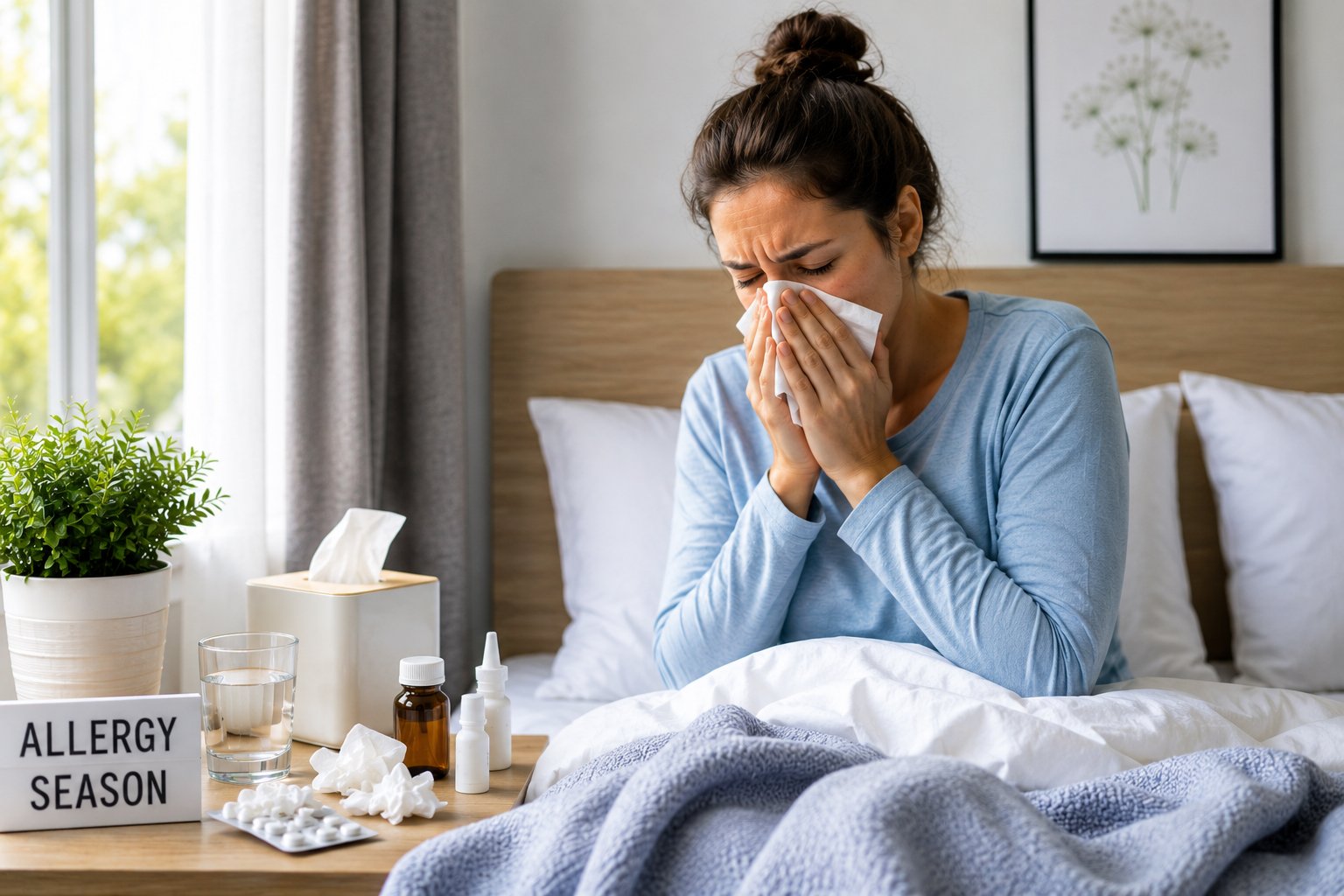
A good night’s sleep is essential for maintaining your physical health, mental wellbeing, and energy levels. However, if you regularly wake up with a blocked nose, itchy eyes, or persistent sneezing, allergies could be affecting your sleep more than you realise.
Millions of people in the UK experience seasonal allergies, hay fever, or indoor allergies caused by dust mites, mould, or pet dander. While these allergies are commonly associated with daytime discomfort, they can also disrupt your sleep and leave you feeling exhausted the next morning.
In this guide, we’ll explain how allergies affect sleep, common symptoms to watch for, and practical steps to improve your sleep quality.
What Are Allergies?
Allergies occur when your immune system reacts to substances that are normally harmless. These substances are known as allergens.
Common allergens include:
- Pollen
- Dust mites
- Pet dander
- Mould spores
- Certain foods
When exposed to allergens, your body releases chemicals such as histamine, which causes allergy symptoms.
How Can Allergies Affect Your Sleep?
Many allergy symptoms become more noticeable at night.
This may happen because:
- You’re lying flat, allowing mucus to build up.
- Dust mites are commonly found in bedding.
- Bedroom ventilation may be poor.
- Pollen can enter through open windows.
These factors can make sleeping comfortably much more difficult.
Common Allergy Symptoms That Disrupt Sleep
If allergies are affecting your sleep, you may experience:
Blocked Nose
A congested nose makes breathing through your nose difficult, often causing mouth breathing and disturbed sleep.
Sneezing
Repeated sneezing during the evening or early morning may interrupt your sleep.
Itchy Eyes
Itchy or watery eyes can make relaxing before bed more difficult.
Persistent Cough
Post-nasal drip caused by allergies may trigger coughing during the night.
Snoring
Nasal congestion can increase snoring by reducing airflow.
Which Allergies Are Most Likely to Affect Sleep?
Hay Fever
Pollen levels often remain high during spring and summer.
People with hay fever frequently report:
- Difficulty falling asleep
- Frequent waking
- Poor sleep quality
Dust Mite Allergy
Dust mites live in:
- Mattresses
- Pillows
- Carpets
- Soft furnishings
Because you’re in close contact with bedding throughout the night, symptoms may worsen while sleeping.
Pet Allergies
Pet hair and dander can remain on bedding and furniture long after your pet has left the room.
Mould Allergy
Bedrooms with poor ventilation may encourage mould growth, increasing allergy symptoms overnight.
Signs Your Allergies May Be Affecting Sleep
You may notice:
- Waking with a blocked nose
- Dry mouth
- Poor sleep quality
- Daytime tiredness
- Difficulty concentrating
- Morning headaches
Tips to Sleep Better with Allergies
1. Keep Your Bedroom Clean
Vacuum regularly using a HEPA-filter vacuum.
Wash bedding weekly in hot water.
2. Reduce Dust Mites
Use:
- Mattress protectors
- Pillow protectors
- Anti-allergy bedding
3. Keep Windows Closed During High Pollen Days
Especially during spring and early summer.
4. Shower Before Bed
Showering removes pollen from:
- Hair
- Skin
- Clothing
This reduces allergens entering your bed.
5. Use an Air Purifier
A quality air purifier may help reduce airborne allergens in the bedroom.
6. Keep Pets Out of the Bedroom
Even if you don’t notice symptoms during the day, pet dander can build up in bedding.
7. Maintain Healthy Humidity Levels
Aim for moderate humidity.
Too much moisture encourages mould growth.
Can Poor Sleep Make Allergy Symptoms Feel Worse?
Yes.
Poor sleep may leave you feeling:
- More tired
- Less focused
- Irritable
- Less able to cope with allergy symptoms
Good sleep supports your overall wellbeing and helps you feel more refreshed during allergy season.
When Should You Seek Medical Advice?
Speak to a healthcare professional if:
- Allergy symptoms continue despite home measures.
- Poor sleep affects your daily routine.
- You experience breathing difficulties.
- Snoring becomes severe.
- Symptoms last for several weeks.
Professional assessment can help identify the underlying cause and recommend appropriate treatment.
Healthy Habits That Support Better Sleep
Alongside managing allergies:
- Follow a regular bedtime routine.
- Reduce screen time before bed.
- Stay hydrated.
- Exercise regularly.
- Keep your bedroom cool and dark.
These habits can improve sleep quality throughout the year.
FAQ
Can allergies cause poor sleep?
Yes. Symptoms such as nasal congestion, sneezing, coughing, and itchy eyes can make it difficult to fall asleep and stay asleep.
Why are allergy symptoms worse at night?
Lying down, exposure to dust mites in bedding, and indoor allergens can make symptoms more noticeable during the night.
Can hay fever cause insomnia?
Hay fever can contribute to difficulty sleeping because blocked noses, sneezing, and itchy eyes may interrupt normal sleep.
Does an air purifier help with allergies?
An air purifier may help reduce airborne allergens such as dust, pollen, and pet dander, depending on the type of allergen and purifier used.
How can I reduce dust mites in my bedroom?
Wash bedding weekly in hot water, use allergen-proof mattress and pillow covers, vacuum regularly, and reduce clutter that collects dust.
Conclusion
Allergies can have a significant impact on your sleep, especially if symptoms become worse at night. Fortunately, simple changes such as keeping your bedroom clean, reducing exposure to allergens, and following healthy sleep habits can make a noticeable difference.
If your symptoms continue or regularly interfere with your sleep, seeking professional medical advice is the best way to identify the cause and receive appropriate treatment. Better allergy management can lead to better sleep and improved overall wellbeing.