
Buy Sleeping Pills UK –
Getting a good night’s sleep is not just about going to bed at the right time. Your sleeping environment also plays an important role in how easily you fall asleep, how often you wake up and how refreshed you feel in the morning.
One factor that people sometimes overlook is bedroom temperature.
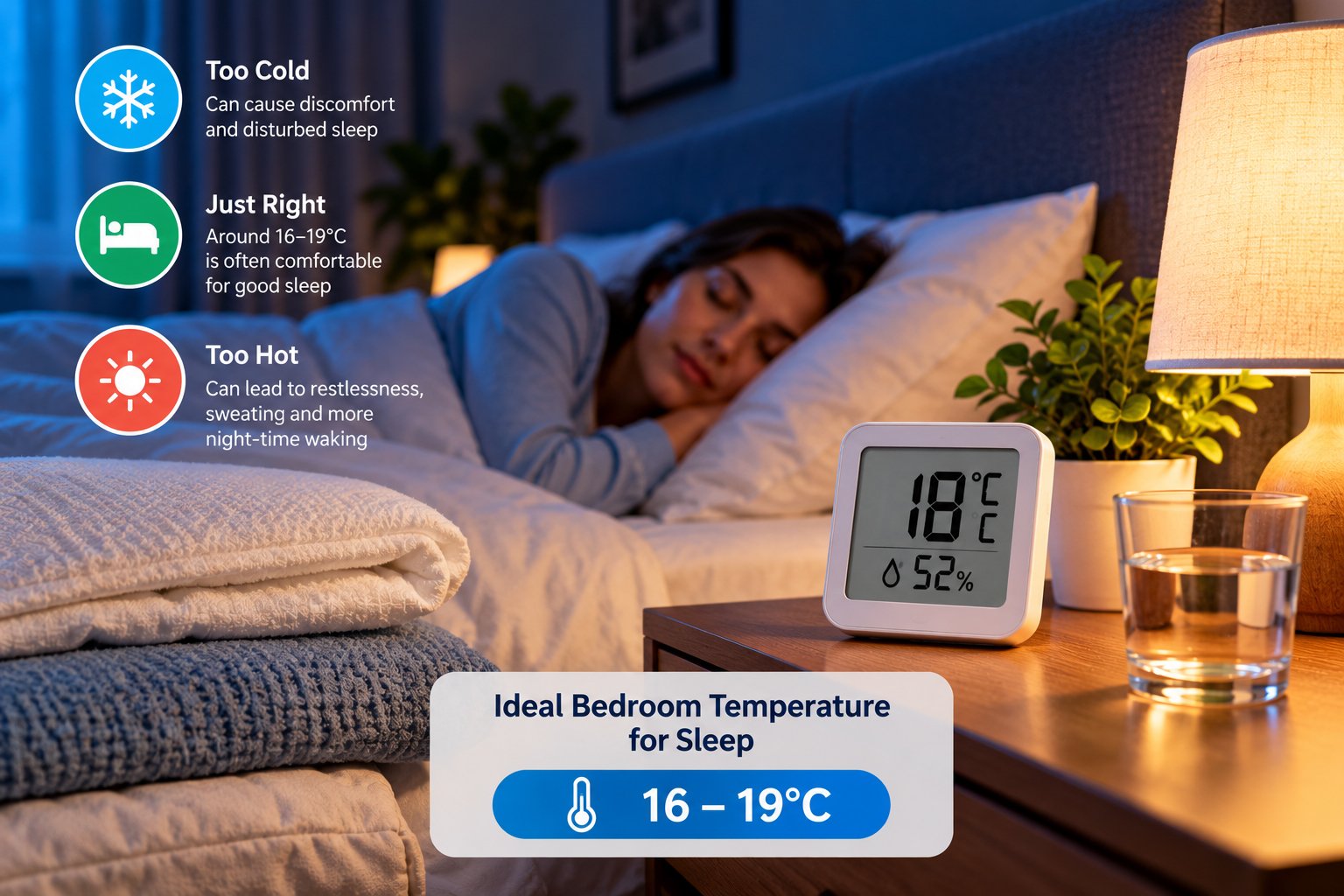
If your bedroom is too hot, you may struggle to fall asleep, wake up sweating or feel restless during the night. On the other hand, an excessively cold room can make it difficult to relax and remain comfortable.
Finding a suitable sleeping temperature can help support your body’s natural sleep cycle and create a more restful environment.
In this guide, we explain how bedroom temperature affects sleep quality, why body temperature changes at night and what practical steps can help you sleep more comfortably throughout the year.
Why Does Bedroom Temperature Matter for Sleep?
Your body temperature changes naturally throughout the day and night. These changes are controlled partly by your internal biological clock, also known as your circadian rhythm.
As bedtime approaches, your core body temperature normally begins to decrease. This change is one of the signals associated with preparing your body for sleep.
A comfortable sleeping environment supports this natural process.
However, when your bedroom is excessively warm or cold, your body may need to work harder to regulate its temperature. This can contribute to discomfort, interrupted sleep and difficulty settling down.
Temperature is not the only factor affecting sleep quality, but it is an important part of creating a healthy bedroom environment.
What Is the Best Bedroom Temperature for Sleeping?
If you realise you have forgotten a dose, follow these steps.
1. Check the Patient Information Leaflet
There is no single ideal bedroom temperature that works for everyone.
Many sleep guides suggest that a slightly cool bedroom is generally more comfortable for adults than an overly warm one. A temperature of approximately 16–19°C is a useful starting point for some adults, although personal preferences, bedding, clothing, age and health conditions can affect what feels comfortable.
Rather than focusing on one exact number, aim for a room that feels pleasantly cool without leaving you shivering.
The most suitable temperature may also depend on:
- Your age and general health
- The season and outdoor weather
- Your mattress and bedding
- The type of nightwear you use
- Air circulation and humidity
- Individual sensitivity to heat or cold
Babies, older adults and people with certain medical conditions may have different temperature-related needs. Follow appropriate health guidance rather than applying an adult temperature range to everyone.
How Does a Hot Bedroom Affect Sleep Quality?
Sleeping in a room that is too warm can make it harder for your body to release heat as bedtime approaches.
This may interfere with the normal temperature changes associated with sleep.
1. Difficulty Falling Asleep
When your body cannot cool down comfortably, you may find yourself lying awake longer than usual.
You might repeatedly adjust your bedding, change sleeping positions or feel unable to relax.
2. More Frequent Night-Time Awakenings
Excessive warmth can cause sweating, discomfort and repeated awakenings.
Even if you fall asleep quickly, a hot bedroom may make it difficult to remain asleep throughout the night.
3. Changes in Sleep Stages
Research suggests that exposure to excessive heat can affect sleep structure, including slow-wave sleep and rapid eye movement (REM) sleep.
These stages are involved in important physical and mental processes.
A disrupted sleeping environment may leave you feeling less refreshed the following morning.
4. Increased Sweating and Discomfort
Warm conditions, heavy bedding and poor air circulation can contribute to night-time sweating.
If your nightwear or bedding becomes damp, you may wake up feeling uncomfortable.
Persistent or unexplained night sweats should be discussed with a healthcare professional, particularly if they occur alongside other symptoms.
Can a Cold Bedroom Affect Sleep?
A cooler bedroom can support comfortable sleep, but excessively cold conditions can also create problems.
If you feel too cold, you may struggle to settle down or wake up because of discomfort.
Possible effects include:
- Difficulty relaxing before bedtime
- Cold hands and feet
- Repeated awakenings
- Muscle tension or discomfort
- Feeling tired after disturbed sleep
A cold room is not automatically better for sleep.
The goal is to maintain a comfortable balance between room temperature, suitable bedding and personal warmth.
People who are older, have reduced mobility or have certain health conditions may be particularly vulnerable to the effects of cold indoor temperatures.
In the UK, the NHS advises that homes should generally be heated to at least 18°C during cold weather, particularly for people aged 65 or over or those with existing health conditions. Bedroom comfort should be considered alongside this wider health advice.
How Does Body Temperature Change During Sleep?
Your body has an internal temperature-regulation system that works alongside your sleep-wake cycle.
Before Bedtime
As you prepare for sleep, your core body temperature normally begins to decrease.
Blood flow to the skin, including the hands and feet, helps your body release heat.
Your body has an internal temperature-regulation system that works alongside your sleep-wake cycle.
Before Bedtime
As you prepare for sleep, your core body temperature normally begins to decrease.
Blood flow to the skin, including the hands and feet, helps your body release heat.
Towards Morning
Core body temperature begins to rise as your body prepares for wakefulness.
These natural changes help explain why a comfortable bedroom temperature can make a difference to your overall sleep experience.
How Does Bedroom Humidity Affect Sleep?
Temperature is not the only environmental factor that matters.
Humidity, which refers to the amount of moisture in the air, can influence how warm or uncomfortable a bedroom feels.
High Humidity
When humidity is high, sweat may evaporate less effectively, making it harder to cool down.
This can leave you feeling sticky, uncomfortable or overheated.
High indoor moisture levels can also encourage damp and mould growth, which may be particularly problematic for people with respiratory conditions or allergies.
Low Humidity
Very dry air may contribute to irritation of the nose, throat or skin.
Some people may notice greater discomfort when heating systems are running during winter.
Improving ventilation, addressing damp and maintaining a comfortable indoor environment can help.
There is no need to chase a precise humidity reading if your room is already comfortable and free from damp or condensation problems.
10 Practical Tips to Keep Your Bedroom Comfortable at Night
Improving bedroom comfort does not always require expensive equipment. Small adjustments can often make a noticeable difference.
1. Keep Your Bedroom Slightly Cool
Try maintaining a comfortably cool room rather than allowing it to become excessively warm.
If you use central heating or air conditioning, adjust the settings gradually and pay attention to how well you sleep.
2. Choose Breathable Bedding
Lightweight, breathable bedding can help reduce heat build-up.
Cotton and linen are popular choices, although comfort also depends on the fabric construction and overall bedding weight.
In warmer weather, consider replacing a heavy duvet with a lighter option.
3. Wear Comfortable Nightwear
Choose loose-fitting nightwear that feels comfortable against your skin.
During summer, lightweight clothing may help prevent overheating. In winter, warmer nightwear can help you remain comfortable without excessively heating the room.
4. Improve Air Circulation
A fan or suitable ventilation can make a warm bedroom feel more comfortable.
Where practical and safe, opening a window may help improve airflow.
However, outdoor noise, pollution, security and seasonal weather should also be considered.
5. Block Excessive Daytime Heat
During hot weather, sunlight entering through windows can raise indoor temperatures.
Closing curtains or blinds during the hottest parts of the day may help reduce heat gain, particularly in rooms exposed to direct sunlight.
6. Avoid Heavy Bedding in Summer
Using the same thick duvet throughout the year may leave you too warm during summer.
Consider changing your duvet weight or using a lighter blanket as temperatures rise.
7. Take a Warm Bath Before Bed
A comfortably warm bath or shower before bedtime may help some people relax and support the body’s natural cooling process afterwards.
Research suggests that warm bathing around one to two hours before bedtime may help with falling asleep for some people.
Avoid water that is excessively hot, particularly if you are prone to dizziness or have a medical condition that affects temperature regulation.
8. Keep a Consistent Sleep Schedule
A regular bedtime and waking time can help support your circadian rhythm.
Even when your bedroom temperature is comfortable, an irregular sleep schedule may make it harder to fall asleep consistently.
Read our guide on how to create a consistent sleep schedule for more practical advice.
9. Reduce Heat-Producing Devices
Computers, gaming equipment and some lighting can add heat to a small room.
Switch off unnecessary devices before bedtime where practical.
This may also help create a calmer sleeping environment.
10. Adjust Your Bedroom for the Season
Your bedroom needs may change throughout the year.
During summer, focus on reducing heat build-up and improving airflow.
During winter, focus on safe heating, appropriate bedding and preventing uncomfortable cold.
The aim is year-round comfort rather than maintaining exactly the same room temperature in every season.
How to Sleep Better During Hot Summer Nights
Warm summer nights can make it particularly difficult to sleep comfortably.
If your bedroom becomes overheated, try these practical steps:
- Close curtains during the hottest part of the day.
- Open windows when the outdoor air is cooler, if safe.
- Use a fan to improve airflow.
- Choose lightweight bedding and nightwear.
- Drink enough water throughout the day.
- Avoid heavy meals and excessive alcohol close to bedtime.
- Keep your bedroom as dark and quiet as possible.
If you use a fan, position it safely and follow the manufacturer’s instructions.
During a heatwave, follow official UK health guidance, particularly if you are older, pregnant or have a medical condition that increases your vulnerability to heat.
How to Keep Your Bedroom Comfortable in Winter
Cold weather can also affect sleep comfort.
To create a suitable winter sleeping environment:
- Heat your home to a safe and comfortable level.
- Use bedding appropriate for the season.
- Keep draughts under control without blocking essential ventilation.
- Wear comfortable nightwear.
- Check for condensation and damp.
- Avoid using unsafe portable heaters near bedding or curtains.
Do not use outdoor heaters, barbecues or other fuel-burning equipment indoors to warm a bedroom because of the risk of carbon monoxide poisoning.
If you have a health condition or are particularly vulnerable to cold, follow NHS guidance on keeping your home warm.
Can Bedroom Temperature Affect Insomnia?
An uncomfortable bedroom can contribute to difficulty falling asleep or staying asleep.
For someone already experiencing insomnia, excessive heat, cold or poor ventilation may make existing sleep problems more noticeable.
However, bedroom temperature is only one possible factor.
Other common contributors to sleep difficulties include:
- Stress and anxiety
- Irregular sleeping patterns
- Caffeine consumed late in the day
- Alcohol
- Noise and light
- Certain medicines
- Underlying health conditions
Improving your bedroom environment may help, but it will not necessarily resolve persistent insomnia on its own.
If sleep problems continue for several weeks or affect your daily life, speak to a GP. They can help identify possible causes and discuss suitable treatment, including cognitive behavioural therapy for insomnia (CBT-I).
When Should You Seek Medical Advice?
Consider speaking to a healthcare professional if you:
- Regularly struggle to sleep despite improving your bedroom environment.
- Experience persistent or unexplained night sweats.
- Wake up excessively hot or cold without an obvious reason.
- Feel unusually tired throughout the day.
- Have breathing difficulties or regularly wake up gasping.
- Experience sleep problems alongside other unexplained symptoms.
A comfortable bedroom is an important part of good sleep hygiene, but ongoing symptoms may require medical assessment.
Frequently Asked Questions
1. What is the ideal bedroom temperature for sleeping?
There is no universal ideal temperature. A slightly cool bedroom, often around 16–19°C for some adults, can be a useful starting point, but comfort varies. People vulnerable to cold may need warmer conditions, and UK winter health guidance recommends at least 18°C for many households.
2. Is it better to sleep in a cold or warm room?
A comfortably cool room is generally preferable to an overheated bedroom. However, sleeping in a room that is excessively cold can also disrupt sleep and may pose health risks for vulnerable people.
3. Why do I wake up sweating at night?
A warm bedroom, heavy bedding or unsuitable nightwear may contribute to sweating. However, persistent night sweats can also have medical causes. Speak to a GP if they occur regularly without a clear explanation.
4. Does a fan help you sleep better?
A fan may improve comfort by moving air and helping you feel cooler. It can be particularly useful during warm weather, although its effectiveness depends on the room temperature and humidity.
5. Can sleeping in a hot room affect REM sleep?
Yes. Research indicates that excessive heat exposure can interfere with sleep structure, including REM sleep and slow-wave sleep. The effects depend on environmental conditions and individual factors.
6. Can bedroom temperature cause insomnia?
An uncomfortable bedroom can contribute to sleep difficulties, but insomnia often has multiple causes. Improving room temperature may help some people, while persistent insomnia may require further assessment.
7. How can I keep my bedroom cool without air conditioning?
Try closing curtains during hot afternoons, improving ventilation when outdoor conditions are cooler, using a fan and choosing lightweight bedding. Follow official heat-health advice during very hot weather.
Conclusion
Bedroom temperature can influence how quickly you fall asleep, how comfortably you rest and how often you wake during the night.
An excessively warm room may contribute to sweating, restlessness and disrupted sleep stages, while an overly cold room can cause discomfort and repeated awakenings.
The best approach is to create a sleeping environment that feels comfortably cool, with suitable bedding, ventilation and seasonal adjustments.
By combining these changes with a consistent sleep schedule and healthy bedtime habits, you can support better sleep quality throughout the year.
Medical disclaimer: This article provides general information about sleep and bedroom comfort. It is not a substitute for professional medical advice. If you experience persistent sleep difficulties, unexplained night sweats or other concerning symptoms, consult a qualified healthcare professional.
