Buy Sleeping Pills UK –
Pregabalin is a prescription medicine used in the UK for several conditions, including nerve pain, epilepsy and generalised anxiety disorder. It is available in a range of strengths, including 300mg capsules and tablets.
Pregabalin 300mg is a higher-strength formulation and may form part of an individual’s prescribed treatment when a healthcare professional considers it appropriate. The right dose varies from person to person and can depend on the condition being treated, kidney function, other medicines and how the individual responds to treatment.
Like any prescription medicine, pregabalin can cause side effects. Common effects include sleepiness, dizziness and headaches. It can also cause dependence in some people, meaning treatment should not be stopped suddenly without medical advice.
This guide explains pregabalin 300mg, its uses, potential side effects, safety considerations, medicine interactions and important information for UK patients.
Important: This article provides general health information and does not replace advice from a GP, pharmacist or other qualified healthcare professional.
What Is Pregabalin 300mg?
Pregabalin belongs to a group of medicines called anticonvulsants.
It is used to treat:
- Nerve pain
- Epilepsy
- Generalised anxiety disorder in adults
For nerve pain, pregabalin affects the way pain messages travel through the nervous system. In epilepsy, it helps reduce abnormal electrical activity in the brain.
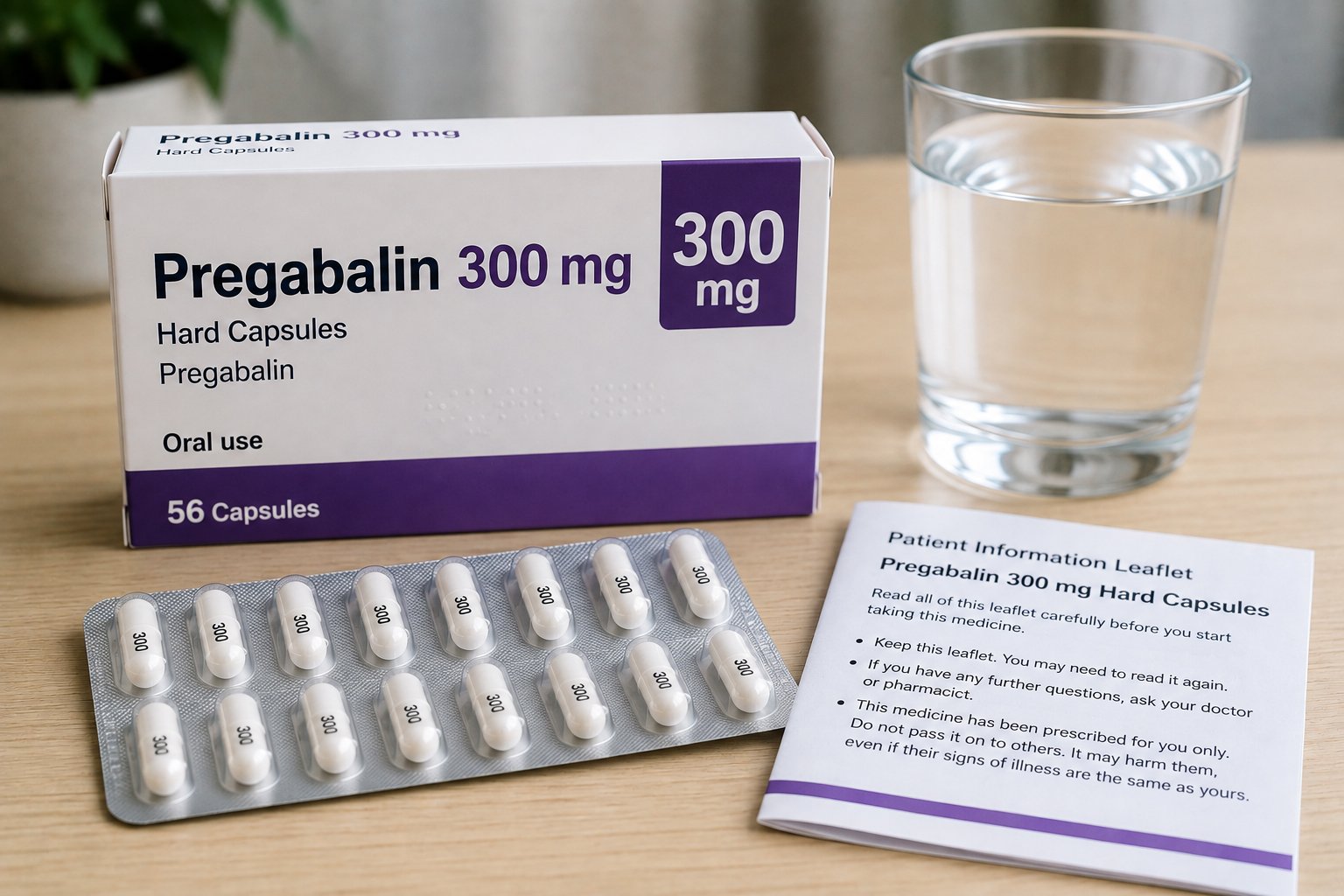
Pregabalin 300mg refers to a capsule or tablet containing 300mg of pregabalin.
It is important to understand that a 300mg strength does not mean that everyone should take 300mg. Your prescribed strength and schedule should always come from your healthcare professional.
What Is Pregabalin 300mg Used For?
1. Nerve Pain
One of the main uses of pregabalin is treating certain types of neuropathic or nerve pain.
Nerve pain can feel different from ordinary muscle or joint pain. People may describe it as:
- Burning
- Shooting
- Stabbing
- Electric-shock-like sensations
- Pins and needles
- Tingling
NHS information confirms that pregabalin is used for nerve pain caused by conditions such as diabetes, shingles or an injury.
2. Epilepsy
Pregabalin can also be used as an additional treatment for certain types of epilepsy.
It works by reducing abnormal electrical activity in the brain.
People taking pregabalin for epilepsy should take it consistently according to their prescription because missing doses can increase the risk of seizures.
3. Generalised Anxiety Disorder
Pregabalin is also licensed for generalised anxiety disorder in adults.
It can affect the release of certain chemicals involved in the brain’s response to anxiety.
However, it should only be used for anxiety when prescribed by an appropriate healthcare professional.
How Does Pregabalin Work?
Pregabalin changes the way nerve cells communicate with the nervous system.
For nerve pain, it reduces the transmission of certain pain signals travelling through the nervous system. For epilepsy, it helps reduce abnormal electrical activity in the brain.
Pregabalin is therefore different from opioid painkillers such as codeine, dihydrocodeine and tramadol.
This distinction is particularly important because pregabalin should not be treated as simply another type of conventional painkiller.
How Long Does Pregabalin Take to Work?
Pregabalin does not necessarily provide immediate relief.
NHS guidance states that it can take at least a few weeks to work fully.
The time needed can vary depending on:
- The condition being treated
- The prescribed dose
- Individual response
- How gradually the dose is increased
If your symptoms are not improving, speak with your doctor rather than changing your dose yourself.
Pregabalin 300mg Dosage and Strengths
Pregabalin is available in several strengths.
Standard tablets and capsules include:
- 25mg
- 50mg
- 75mg
- 100mg
- 150mg
- 200mg
- 225mg
- 300mg
NHS guidance states that the usual total daily dose of standard pregabalin is between 150mg and 600mg, divided into two or three doses, depending on the condition and individual circumstances.
However, this does not mean that every patient should take 300mg or that a higher dose is necessarily better.
Doctors generally start treatment at a lower dose and increase it gradually where appropriate. People with reduced kidney function may require a different dose.
Never change from a lower strength to Pregabalin 300mg without medical advice.
Common Pregabalin 300mg Side Effects
Pregabalin can cause side effects, although not everyone experiences them.
Common side effects include:
Sleepiness and Tiredness
Pregabalin can make you feel sleepy or tired, particularly when treatment is started or the dose is increased.
Dizziness
Dizziness is another commonly reported effect.
If you feel dizzy or unsteady, take care when standing and avoid activities requiring full concentration.
Headaches
Headaches can occur, particularly during the early stages of treatment.
Blurred Vision
Some people may experience changes in their vision.
Do not drive or operate machinery while your vision is affected.
Swollen Hands, Arms, Legs or Feet
Pregabalin can cause fluid retention and swelling in some people.
Weight Gain
Some people experience increased appetite and weight gain while taking pregabalin.
Nausea or Vomiting
Feeling sick or being sick can also occur.
NHS guidance lists sleepiness, tiredness, dizziness, headaches, diarrhoea, nausea, blurred vision, swelling, weight gain and memory problems among possible side effects.
Is Pregabalin 300mg Addictive?
Pregabalin can cause dependence in some people.
This is an important consideration, particularly with long-term treatment.
Signs that may indicate dependence can include:
- Finding it difficult to stop taking the medicine
- Feeling that you need to take it more often
- Taking more than prescribed
- Experiencing withdrawal symptoms after stopping
- Strong cravings for the medicine
NHS guidance confirms that some people can become addicted to pregabalin and may experience withdrawal symptoms when treatment is stopped.
If you are concerned about dependence, speak with your GP or pharmacist.
Do Not Stop Pregabalin 300mg Suddenly
If you have been taking pregabalin regularly, do not stop it suddenly unless a healthcare professional specifically instructs you to do so.
Stopping suddenly can cause withdrawal symptoms such as:
- Anxiety
- Difficulty sleeping
- Sweating
- Feeling sick
- Pain
- Restlessness
- Shaking
For people taking pregabalin for epilepsy, suddenly stopping treatment can also trigger seizures.
A doctor can reduce the dose gradually when discontinuing treatment.
Pregabalin 300mg and Alcohol
It is best to avoid alcohol while taking pregabalin.
Alcohol can increase sleepiness and affect concentration. It may also affect breathing.
Combining pregabalin and alcohol can therefore make it more difficult to carry out activities that require alertness.
If you are unsure about drinking alcohol while taking pregabalin, ask your pharmacist or doctor.
Can You Drive While Taking Pregabalin 300mg?
Pregabalin can cause:
- Sleepiness
- Dizziness
- Blurred vision
- Reduced concentration
NHS guidance advises not to drive, cycle or operate tools or machinery while experiencing these effects.
If you have recently started pregabalin or your dose has changed, take particular care until you know how it affects you.
If you are unsure whether you are fit to drive, do not drive and seek professional advice.
Pregabalin 300mg and Other Medicines
Tell your doctor or pharmacist about all medicines you take.
This includes:
- Prescription medicines
- Over-the-counter medicines
- Painkillers
- Sleeping medicines
- Medicines that cause drowsiness
- Herbal remedies
- Vitamins and supplements
Pregabalin can increase the sedative effects of medicines that cause sleepiness or dizziness.
Pregabalin and Opioid Painkillers
This is particularly important for people who take medicines such as:
- Codeine
- Dihydrocodeine
- Tramadol
- Morphine
- Oxycodone
NHS guidance advises patients to tell their doctor if they are taking strong opioid painkillers such as morphine, codeine or oxycodone.
The combination of pregabalin with opioids or other central nervous system depressants can increase the risk of excessive sedation and breathing problems.
UK medicines safety guidance specifically warns about respiratory depression with pregabalin, particularly in people taking other medicines that depress the central nervous system, including opioids.
Do not combine pregabalin with opioid medicines unless your healthcare professional has prescribed or advised the combination.
Who May Need Extra Advice Before Taking Pregabalin?
Pregabalin may not be suitable for everyone.
Tell your doctor if you:
- Have kidney problems
- Have breathing problems
- Have heart disease
- Have liver or kidney disease
- Have previously experienced medicine misuse or addiction
- Are pregnant or planning a pregnancy
- Are breastfeeding
- Have previously had an allergic reaction to pregabalin
NHS guidance recommends discussing these circumstances with a healthcare professional before treatment.
What Happens If You Take Too Much Pregabalin?
Taking more pregabalin than prescribed can cause serious symptoms.
Possible signs include:
- Severe sleepiness
- Confusion
- Agitation
- Dizziness
- Seizures
- Loss of consciousness
NHS guidance advises contacting 111 if you take more than your prescribed dose. If you develop severe sleepiness, confusion, a seizure or lose consciousness, urgent hospital assessment is required.
If someone is unconscious or having serious breathing difficulties, call 999.
Pregabalin 300mg Safety Tips
If you have been prescribed pregabalin:
- Take it exactly as directed.
- Do not increase the dose yourself.
- Do not share your medicine.
- Avoid alcohol unless your healthcare professional advises otherwise.
- Tell your pharmacist about other medicines.
- Be particularly careful when taking opioid medicines.
- Do not drive if you feel sleepy or dizzy.
- Do not suddenly stop regular treatment.
- Keep your medicine safely away from children.
When Should You Contact a Doctor?
Speak with your doctor or pharmacist if:
- Your symptoms are not improving.
- Side effects are persistent or troublesome.
- You experience significant swelling.
- You develop vision problems.
- You are worried about dependence.
- You want to stop taking pregabalin.
- You are taking opioids or other medicines that cause drowsiness.
- You accidentally take more than prescribed.
Seek emergency medical help if you experience serious breathing difficulties, lose consciousness or develop symptoms of a severe allergic reaction.
Pregabalin 300mg: Key Points to Remember
The most important things to remember are:
- Pregabalin is a prescription medicine.
- It can be used for nerve pain, epilepsy and generalised anxiety disorder in adults.
- 300mg is one of several available strengths.
- The correct dose depends on the individual.
- Dizziness and sleepiness are common side effects.
- Alcohol can increase drowsiness and may affect breathing.
- Pregabalin can interact with opioid medicines.
- Some people can develop dependence.
- Do not stop regular treatment suddenly.
- Always follow your prescriber’s instructions.
FAQ
What is Pregabalin 300mg used for?
Pregabalin is used to treat certain types of nerve pain, epilepsy and generalised anxiety disorder in adults.
Is Pregabalin 300mg a high strength?
300mg is one of the standard strengths available for pregabalin. The appropriate dose varies between patients and depends on the condition being treated and individual factors.
What are the common side effects of Pregabalin 300mg?
Common side effects include sleepiness, tiredness, dizziness, headaches, nausea, blurred vision, swelling and weight gain.
Can Pregabalin 300mg cause dependence?
Yes. Some people can become dependent on pregabalin and experience withdrawal symptoms when treatment is stopped.
Can you drink alcohol while taking Pregabalin 300mg?
It is best to avoid alcohol because it can increase sleepiness, affect concentration and potentially affect breathing.
Can you take Pregabalin 300mg with codeine or tramadol?
Pregabalin can interact with opioid medicines and increase the risk of central nervous system depression and breathing problems. Always tell your doctor if you take opioid painkillers such as codeine or tramadol.
Can you stop Pregabalin 300mg suddenly?
No. Regular pregabalin treatment should generally be reduced gradually under medical supervision because sudden stopping can cause withdrawal symptoms and, in people with epilepsy, may trigger seizures.
Conclusion
Pregabalin 300mg is a higher-strength formulation of a prescription medicine used for conditions including nerve pain, epilepsy and generalised anxiety disorder in adults. It can be an important part of treatment when prescribed appropriately, but it should be used carefully and monitored by a healthcare professional.
Understanding possible side effects, interactions and dependence risks is particularly important when taking pregabalin alongside other medicines that cause drowsiness, including opioid painkillers.
If you have concerns about Pregabalin 300mg, your prescribed dose, side effects or stopping treatment, speak with your GP, pharmacist or prescribing healthcare professional.