Buy Sleeping Pills UK –
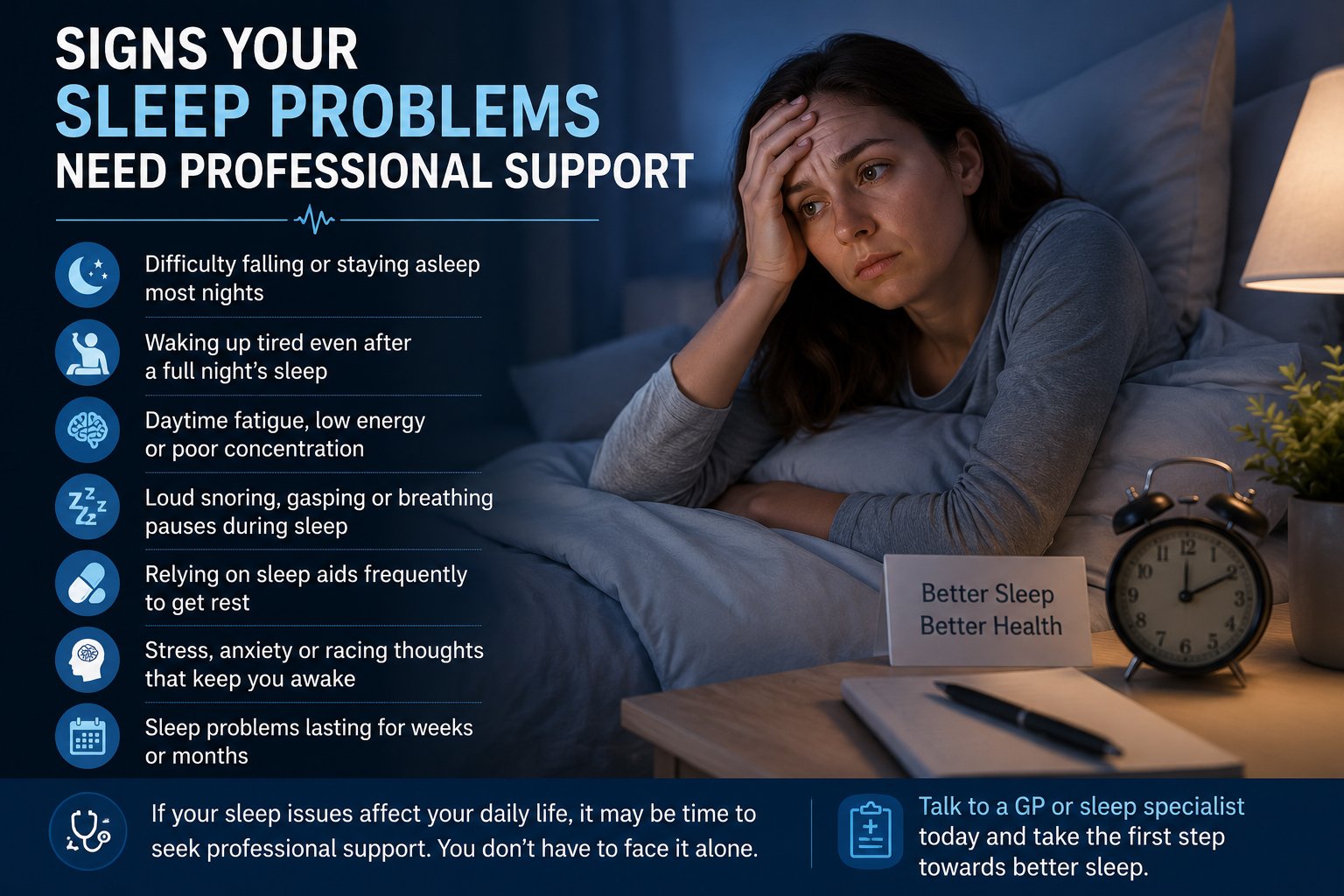
Everyone has occasional sleepless nights. Stress, lifestyle changes, travel, or temporary worries can all affect how well you sleep. But when sleep problems become frequent, start affecting daily life, or continue for weeks or months, it may be time to look beyond self-help strategies.
Many people delay seeking support because they assume poor sleep is normal or something they simply need to live with. In reality, persistent sleep difficulties can sometimes indicate underlying sleep disorders or other health issues that benefit from professional assessment and treatment.
This guide explains the key warning signs that your sleep problems may need professional support and what steps people in the UK can take next.
Why Sleep Problems Shouldn’t Be Ignored
Quality sleep supports concentration, mood, immune function, recovery, and overall wellbeing. When sleep becomes consistently disrupted, the effects can spread into every area of life.
Long-term poor sleep may affect energy levels, mental wellbeing, productivity, and daily functioning.
1. Your Sleep Problems Have Lasted for Months
Occasional sleep disruption is common. However, if difficulty falling asleep, staying asleep, or waking too early continues for months, it may suggest chronic insomnia or another sleep issue.
According to the NHS, you should consider speaking with a GP if changes to your sleep habits have not helped and the problem continues over time.
Warning signs:
- Difficulty sleeping most nights
- Symptoms continuing for several weeks or months
- No improvement despite routine changes
2. Your Sleep Is Affecting Daily Life
One of the clearest indicators that professional support may help is when sleep starts interfering with normal daily activities.
Examples include:
- Struggling to focus at work
- Low productivity
- Constant fatigue
- Irritability or mood changes
- Reduced motivation
The NHS advises seeking support if poor sleep affects your ability to cope with daily life.
3. You Feel Tired Even After Sleeping
Sleeping for enough hours doesn’t always mean your sleep quality is good.
If you:
- wake feeling exhausted
- need excessive caffeine
- feel sleepy throughout the day
- struggle to stay alert
it may indicate an underlying sleep problem rather than simply “not enough sleep”.
4. Loud Snoring or Breathing Changes During Sleep
Sleep isn’t always the problem—sometimes breathing is.
Sleep apnoea is a condition where breathing repeatedly stops and starts during sleep.
Symptoms may include:
- Loud snoring
- Gasping or choking sounds
- Frequent waking
- Morning headaches
- Excessive daytime tiredness
The NHS recommends speaking with a GP if these symptoms occur regularly.
5. You Depend on Sleep Aids Too Often
Occasional short-term support may be appropriate in some cases, but relying heavily on sleep aids without understanding the root cause may not improve long-term sleep.
NHS guidance notes that sleeping medications are generally prescribed only for short periods and treatment often focuses on identifying underlying causes.
6. Anxiety or Racing Thoughts Keep You Awake
Many people experience difficulty sleeping because their mind stays active at night.
You may notice:
- Constant overthinking
- Worrying at bedtime
- Trouble switching off mentally
- Night-time anxiety
Persistent sleep issues linked to emotional wellbeing may benefit from professional support approaches such as structured behavioural treatment.
7.Your Sleep Causes Safety Concerns
Professional support becomes especially important if poor sleep begins creating safety risks.
Effective methods:
- You feel sleepy while driving
- You fall asleep unexpectedly
- Concentration becomes difficult
- Daily tasks feel unsafe
Long-term sleep deprivation can affect alertness and increase risk during normal activities.
What Professional Sleep Support May Include
Depending on symptoms, support may include:
Assessment
- Sleep history review
- Lifestyle evaluation
- Sleep questionnaires
Treatment options
- Sleep education
- Behavioural approaches
- Referral to specialist sleep clinics where appropriate
Specialist NHS sleep services assess complex sleep conditions including sleep apnoea and excessive daytime sleepiness.
Practical Steps to Try Before Seeking Support
For mild sleep difficulties:
- Maintain a regular bedtime
- Limit caffeine later in the day
- Keep your bedroom cool and dark
- Reduce evening screen exposure
- Avoid forcing sleep
These habits may improve sleep quality for some people.
FAQ
1. How do I know if my sleep problems are serious?
If your sleep issues continue for months, affect daily life, or cause daytime exhaustion, professional advice may be helpful.
2. Should I speak to a GP for insomnia?
The NHS recommends speaking with a GP if sleep habit changes have not improved your symptoms.
3. Can stress cause sleep problems?
Yes. Stress and racing thoughts can make falling asleep and staying asleep more difficult.
4. Is daytime tiredness a warning sign?
Persistent tiredness despite sleeping may indicate poor sleep quality or another sleep issue.
5. When should I seek urgent support?
If sleep problems are causing severe distress or creating safety concerns, seek professional help promptly.
Conclusion
Sleep problems are common—but ongoing sleep disruption should not be ignored. If your symptoms last for months, affect daily life, leave you constantly exhausted, or involve unusual sleep behaviours, professional support may help identify the underlying cause.
Better sleep starts with understanding what your body is telling you. Recognising the signs early can help you take the right next step.