Buy Sleeping Pills UK –
Have you noticed that your sleeping habits are different from when you were younger? Perhaps you now wake up earlier, find it harder to fall asleep or feel less refreshed after a full night in bed.
Sleep naturally changes throughout life. Your body’s internal clock, hormones, daily routine and general health can all influence when you feel sleepy and how well you rest.
Some changes are a normal part of ageing, but persistent sleep difficulties should not automatically be considered an unavoidable consequence of getting older. Medical conditions, stress, lifestyle habits and certain medicines can also affect sleep quality.
Understanding how sleep changes at different stages of adulthood can help you make better choices and develop healthier sleeping habits.
In this guide, we explore how age affects sleep, what happens to sleep patterns during adulthood and later life, and practical ways to support better rest at every age.
Why Does Sleep Change as We Get Older?
Sleep is controlled by several biological processes, including the circadian rhythm and the body’s natural drive for sleep.
The circadian rhythm is your internal 24-hour body clock. It helps regulate sleepiness, wakefulness, body temperature and the release of certain hormones.
As you get older, this internal timing system can change. Some people begin feeling sleepy earlier in the evening and naturally wake earlier in the morning.
The structure of sleep can also change. Older adults often experience lighter, more fragmented sleep, spend less time in deep sleep and wake more frequently during the night.
Other factors may contribute, including:
- Changes in hormone levels
- Long-term health conditions
- Chronic pain or physical discomfort
- Medication side effects
- Reduced physical activity
- Changes in work and family routines
- Stress, anxiety or changes in mood
These factors can influence both the amount and quality of sleep you receive.
How Does Sleep Change at Different Ages?
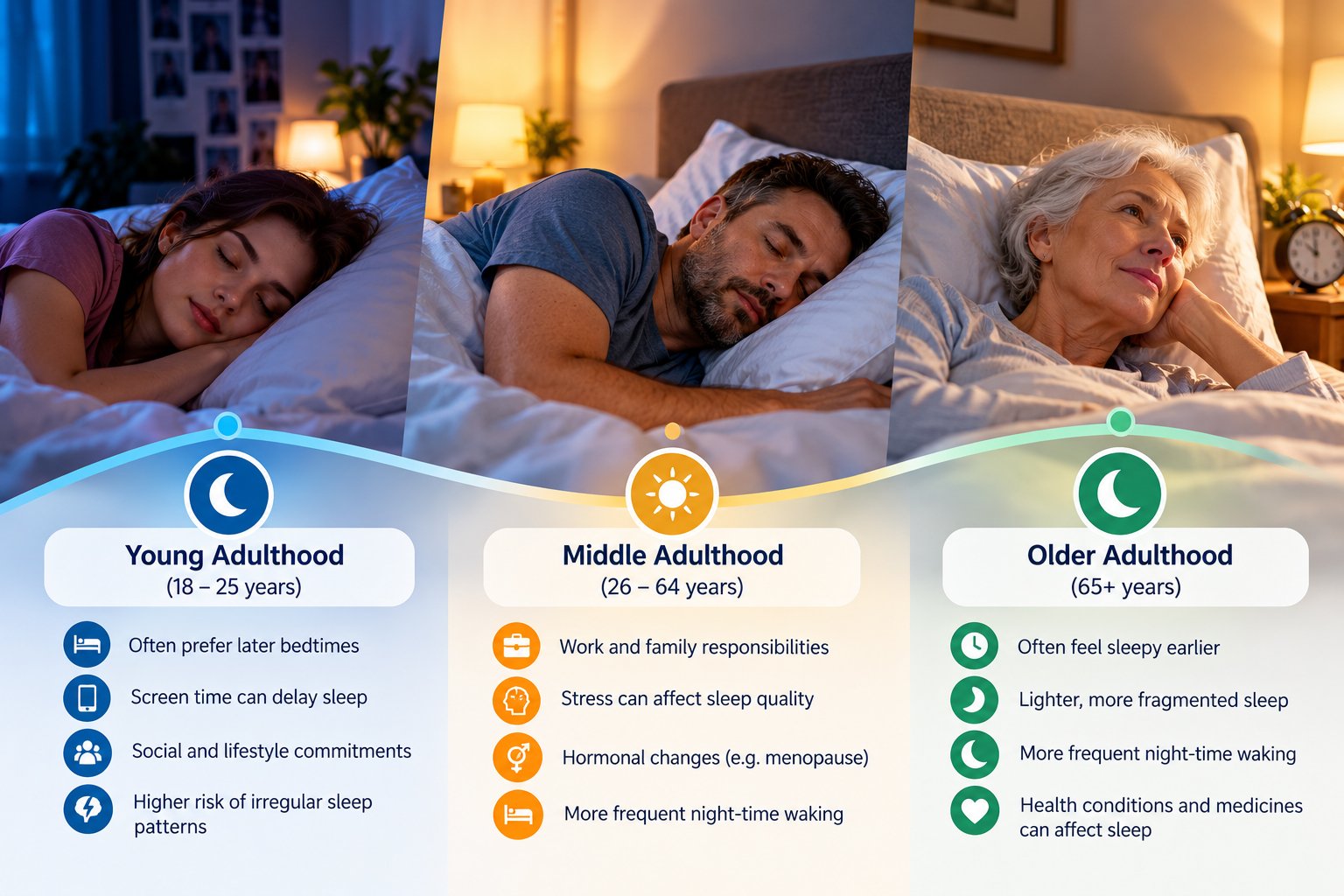
Sleep needs and patterns are not identical throughout adulthood. Understanding the differences between age groups can help explain why your sleeping habits may change over time.
1. Sleep in Young Adulthood (18–25 Years)
Young adulthood often involves significant changes in lifestyle, responsibilities and daily routines.
University, employment, social activities and changing work schedules can all affect sleep patterns.
Some young adults naturally prefer later bedtimes and later waking times. This tendency is associated with changes in the body’s internal clock during adolescence and young adulthood.
Common Sleep Challenges
Young adults may experience:
- Staying awake late at night
- Irregular sleeping schedules
- Excessive screen use before bedtime
- Caffeine consumption late in the day
- Stress related to education, employment or relationships
- Insufficient sleep because of work or social commitments
These habits can make it difficult to maintain a consistent sleep routine.
Tips for Better Sleep
- Try to go to bed and wake up at consistent times.
- Avoid excessive caffeine, particularly later in the day.
- Reduce screen use before bedtime.
- Make time for regular physical activity.
- Allow enough time for sleep rather than regularly staying up late.
Most adults in this age group should aim for around 7–9 hours of sleep each night.
2. Sleep in Middle Adulthood (26–64 Years)
During middle adulthood, work, family responsibilities and everyday commitments can make it difficult to prioritise sleep.
Some people may find that they fall asleep easily but wake during the night. Others may struggle to relax because of stress, responsibilities or irregular working hours.
Sleep patterns may also gradually become lighter and more fragmented compared with earlier adulthood.
Common Sleep Challenges
Adults in this age group may experience:
- Work-related stress
- Family and childcare responsibilities
- Irregular working hours or shift work
- Difficulty switching off mentally before bed
- Caffeine or alcohol affecting sleep
- Hormonal changes, including perimenopause and menopause
- Snoring or symptoms of sleep apnoea
Menopause can be particularly disruptive for some women. Hot flushes and night sweats may cause repeated awakenings and difficulty returning to sleep.
Tips for Better Sleep
- Establish a realistic bedtime routine.
- Make your bedroom comfortable, dark and quiet.
- Avoid heavy meals and alcohol close to bedtime.
- Manage work-related stress before going to bed.
- Maintain regular physical activity.
- Seek medical advice if hormonal symptoms or persistent sleep problems affect daily life.
A consistent routine can be helpful even when work and family responsibilities make maintaining the same schedule challenging.
3. Sleep in Older Adulthood (65 Years and Above)
Sleep patterns often change more noticeably in later life.
Older adults may feel sleepy earlier in the evening and wake earlier in the morning. They may also spend less time in deep sleep and experience more frequent awakenings.
However, older adults still need sufficient sleep. Ageing does not mean that the body no longer needs adequate rest.
Common Sleep Challenges
Older adults may experience:
- Waking several times during the night
- Difficulty staying asleep
- Waking earlier than intended
- Needing to use the toilet during the night
- Joint pain or other physical discomfort
- Medication-related sleep disturbances
- Snoring or obstructive sleep apnoea
- Restless legs or unusual movements during sleep
Some older adults also take daytime naps because their night-time sleep is more fragmented.
Tips for Better Sleep
- Maintain a regular bedtime and waking time.
- Get natural daylight during the day.
- Stay physically active within your abilities.
- Avoid long or late-afternoon naps if they interfere with night-time sleep.
- Keep your bedroom comfortable and free from unnecessary noise.
- Discuss medicine side effects with a pharmacist or GP.
- Seek advice about persistent pain, breathing problems or repeated night-time waking.
It is important not to dismiss ongoing sleep problems as simply part of getting older.
What Happens to Deep Sleep as You Age?
Deep sleep is an important stage of non-rapid eye movement (NREM) sleep. It is associated with physical recovery and other processes that support normal health.
As people move from young adulthood into middle and older age, the amount of time spent in deep sleep generally decreases.
This may mean:
- You wake more easily during the night.
- Small noises disturb your sleep more often.
- You spend more time in lighter sleep stages.
- You may feel that your sleep is less continuous.
REM sleep, the stage commonly associated with dreaming, can also change with age.
These changes are part of normal sleep ageing, but they do not mean that restful sleep is impossible later in life.
Why Do Older Adults Often Wake Up Earlier?
One noticeable change associated with ageing is a shift towards earlier sleep and waking times.
Some older adults naturally become sleepy earlier in the evening and wake before sunrise.
This is linked partly to changes in the circadian rhythm, which regulates the timing of the sleep-wake cycle.
Other factors may contribute to early waking, including:
- Exposure to early morning daylight
- Changes in daily activity
- Medical conditions
- Pain or discomfort
- Anxiety or low mood
- Medication effects
If you wake early but feel rested and function well during the day, this may simply reflect your natural sleep pattern.
However, repeatedly waking too early and feeling exhausted during the day may indicate an underlying sleep problem that deserves attention.
Does Age Affect How Much Sleep You Need?
The amount of sleep required varies between individuals, but ageing does not remove the need for adequate rest.
General recommendations for adults are:
| Age group | Typical sleep recommendation |
|---|---|
| Young adults (18–25) | 7–9 hours |
| Adults (26–64) | 7–9 hours |
| Older adults (65+) | Around 7–8 hours |
These are general guidelines rather than strict rules. Some people naturally need slightly more or less sleep.
The quality of sleep, how refreshed you feel and how well you function during the day are also important.
If you regularly feel tired despite spending enough time in bed, consider discussing your symptoms with a healthcare professional.
Common Health Conditions That Can Affect Sleep With Age
Some sleep difficulties become more common in later life because certain medical conditions and health changes can interfere with normal rest.
1. Arthritis and Chronic Pain
Joint pain, stiffness and other long-term discomfort can make it difficult to find a comfortable sleeping position.
Pain may also cause repeated awakenings during the night.
2. Sleep Apnoea
Obstructive sleep apnoea causes repeated interruptions to breathing during sleep.
Common warning signs include loud snoring, pauses in breathing noticed by another person, waking up gasping and excessive daytime tiredness.
It can affect adults of different ages, but the likelihood increases with age and other risk factors.
3. Restless Legs Syndrome
Restless legs syndrome can cause uncomfortable sensations in the legs and an urge to move them, particularly when resting in the evening or at night.
This can delay sleep and cause repeated disturbances.
4. Menopause and Hormonal Changes
Hormonal changes during perimenopause and menopause can contribute to hot flushes, night sweats and difficulty staying asleep.
People experiencing persistent symptoms should speak to a GP about suitable management options.
5. Medication Side Effects
Some medicines can affect sleep, causing insomnia, vivid dreams, drowsiness or repeated waking.
If you suspect that a medicine is affecting your sleep, check its patient information leaflet and speak to your pharmacist or GP.
Do not stop prescribed treatment without medical advice.
10 Practical Ways to Improve Sleep at Any Age
Although sleep patterns can change throughout adulthood, healthy habits can support better rest.
1. Maintain a Consistent Sleep Schedule
Try to go to bed and wake up at similar times every day.
A regular routine helps support the body’s internal clock and makes it easier to establish predictable sleeping habits.
2. Get Natural Daylight
Exposure to natural daylight during the day helps regulate the circadian rhythm.
Try spending time outdoors in the morning or during daylight hours, depending on your routine and health.
3. Stay Physically Active
Regular movement can support general health and sleep quality.
Walking, gentle stretching, cycling or other suitable activities may help you maintain an active routine.
Choose activities that match your fitness level and any medical advice you have received.
4. Limit Caffeine Later in the Day
Coffee, tea, cola and energy drinks contain caffeine, which can interfere with falling asleep.
Consider reducing caffeine consumption in the afternoon and evening.
5. Avoid Using Alcohol as a Sleep Aid
Alcohol may make you feel sleepy initially, but it can disrupt sleep later in the night.
Reducing evening alcohol consumption may help improve sleep quality.
6. Create a Comfortable Bedroom
Keep your sleeping environment dark, quiet and comfortably cool.
Suitable bedding, breathable nightwear and good ventilation may also help you feel more comfortable.
7. Reduce Screen Time Before Bed
Bright screens and stimulating activities can make it harder to relax before bedtime.
Consider putting your phone, tablet or computer away before you intend to sleep.
8. Manage Stress and Anxiety
Stress can make it difficult to switch off mentally.
Reading, listening to relaxing music, gentle breathing exercises or writing down tomorrow’s tasks may help you prepare for sleep.
If worrying thoughts are a regular problem
9. Be Careful With Daytime Naps
A short nap may be helpful if you are tired, but long or late naps can make it harder to fall asleep at night.
If daytime naps are affecting your bedtime, consider adjusting their length or timing.
10. Review Your Medicines With a Healthcare Professional
If you notice changes in your sleep after starting a medicine or changing its dose, discuss this with your pharmacist or GP.
Do not reduce, stop or change a prescribed medicine without professional guidance.
When Should You Speak to a Doctor About Sleep Changes?
Occasional changes in sleep are common, but persistent problems should not be ignored.
Consider speaking to a GP if you:
- Regularly struggle to fall asleep or stay asleep.
- Feel excessively tired during the day.
- Wake up gasping or choking.
- Snore loudly or experience breathing pauses during sleep.
- Have persistent night sweats.
- Experience ongoing pain that interrupts sleep.
- Notice changes in sleep after starting a medicine.
- Find that poor sleep affects your mood, concentration or everyday activities.
A healthcare professional can assess possible causes and recommend appropriate support.
For ongoing insomnia, cognitive behavioural therapy for insomnia (CBT-I) may be considered. It is a structured approach that helps address thoughts and behaviours contributing to sleep difficulties.
Frequently Asked Questions
1. Does sleep become lighter as you get older?
Yes. Older adults often spend less time in deep sleep and experience more frequent awakenings. However, this does not mean that poor-quality sleep is inevitable.
2. Do older adults need less sleep than young adults?
Not necessarily. Older adults generally still need around 7–8 hours of sleep, although individual requirements vary. Changes in sleep timing and structure do not mean the body no longer needs sufficient rest.
3. Why do older people wake up earlier?
Changes in the circadian rhythm can cause some older adults to feel sleepy earlier and wake earlier in the morning. Daylight, health conditions and daily routines may also influence waking times.
4. Why do I wake up several times during the night as I get older?
Lighter sleep, pain, the need to urinate, medication effects and conditions such as sleep apnoea may contribute to repeated awakenings. If this happens regularly and affects your daytime wellbeing, seek medical advice.
5. Can menopause affect sleep quality?
Yes. Perimenopause and menopause can cause hot flushes and night sweats that interrupt sleep. Hormonal changes may also contribute to difficulty falling or staying asleep.
6. Is it normal to take naps as you get older?
Some older adults find daytime naps helpful, particularly when night-time sleep is fragmented. However, long or late naps may interfere with sleeping at night
7. Can you improve sleep quality as you age?
Yes. A consistent sleep schedule, regular daytime activity, natural daylight, a comfortable bedroom and reduced evening caffeine and alcohol can all support healthier sleep habits.
Conclusion
Sleep changes naturally throughout adulthood. Young adults may experience irregular routines, middle-aged adults often face work and family pressures, and older adults may notice lighter sleep, earlier waking and more frequent night-time interruptions.
Although these changes are common, persistent sleep difficulties should not simply be accepted as an unavoidable part of ageing.
Maintaining a regular sleep schedule, staying active, managing stress and creating a comfortable sleeping environment can support better rest at every stage of life.
If sleep problems continue or affect your everyday wellbeing, speak to a healthcare professional to identify possible causes and discuss suitable support.
Medical disclaimer: This article is for general educational purposes and does not replace professional medical advice, diagnosis or treatment. Sleep needs and health circumstances vary between individuals. Consult a qualified healthcare professional about persistent sleep difficulties or concerns about medicines.