Buy Sleeping Pills UK –
Working night shifts, early mornings or rotating schedules can make getting enough sleep a real challenge. When your working hours change frequently, it can become difficult to maintain a consistent bedtime, wake up feeling refreshed or find enough time to rest between shifts.
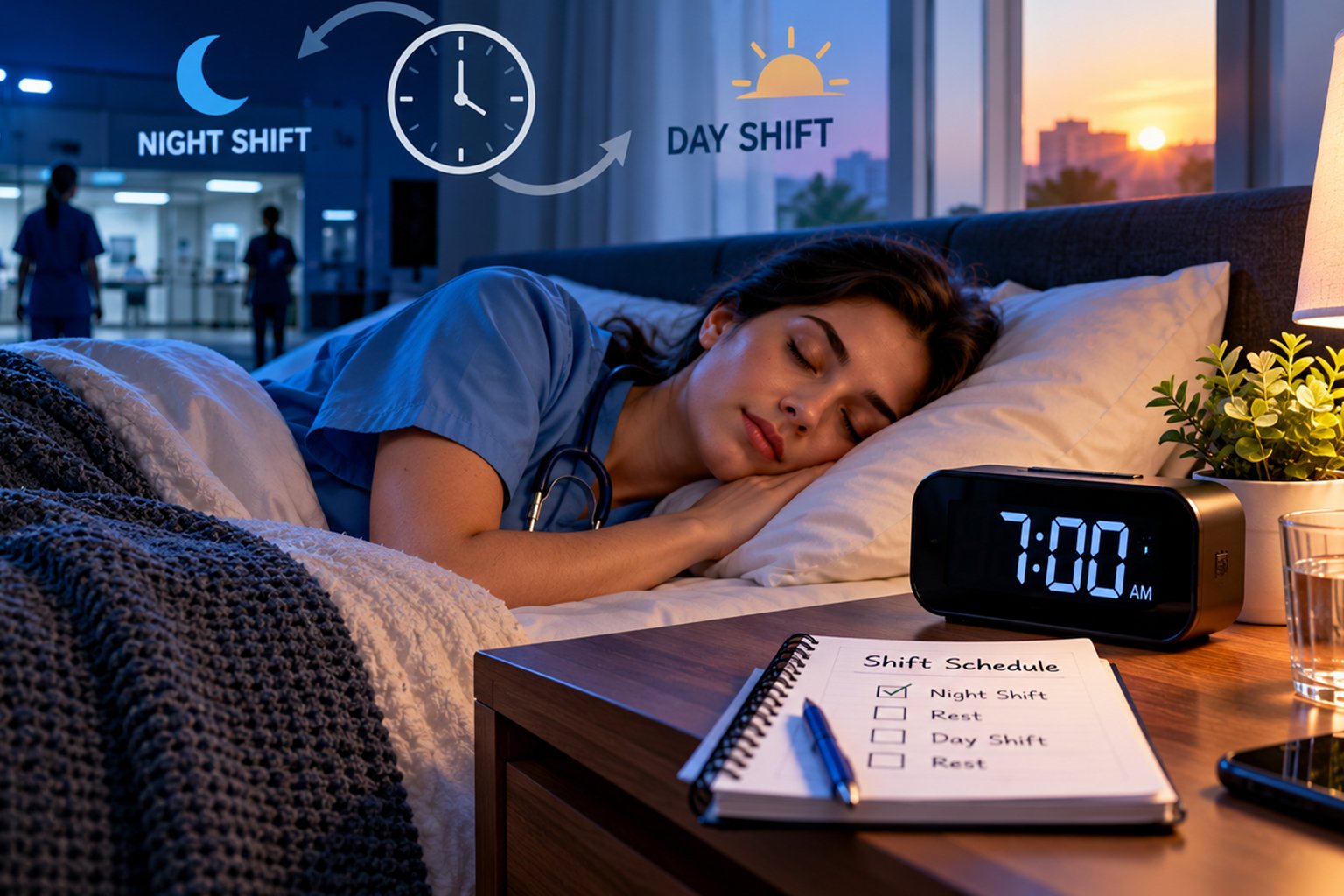
Shift work can affect your body’s natural sleep-wake cycle, also known as the circadian rhythm. This internal clock helps regulate when you feel awake and when you feel sleepy. Working when your body expects to sleep can leave you feeling tired, while trying to sleep during daylight can make it harder to get uninterrupted rest.
The good news is that practical changes to your routine and sleeping environment may help you manage these challenges.
In this guide, we explain how shift work affects sleep quality, why night shifts can be particularly difficult and what you can do to improve rest when your work schedule changes.
What Is Shift Work?
Shift work refers to working hours that fall outside the traditional daytime schedule, often including evenings, overnight hours, early mornings or rotating shifts.
People who commonly work shifts include:
- Nurses, doctors and other healthcare professionals
- Factory and warehouse workers
- Security staff
- Police officers and emergency service workers
- Transport and logistics workers
- Hospitality and retail employees
- Customer service and call centre staff
Some people follow a fixed night-shift pattern, while others move between day, evening and overnight work.
Both arrangements can affect sleep. However, frequently changing shifts may make it particularly difficult to establish a regular sleep routine because the body has less opportunity to adapt.
How Does Shift Work Affect Your Body Clock?
Your circadian rhythm is an internal timing system that operates over roughly 24 hours. It influences sleepiness, alertness, hormone release, body temperature and other biological processes.
Light is one of the most important signals that helps regulate this rhythm. In a typical daytime schedule, daylight encourages wakefulness, while darkness in the evening supports the body’s preparation for sleep.
Shift work can disrupt this pattern.
For example, a night-shift worker may need to remain alert when the body is naturally becoming sleepy. After work, they may then try to sleep during the day, when daylight, noise and the body’s internal clock can encourage wakefulness.
This mismatch can make it harder to fall asleep, stay asleep and feel refreshed after resting.
Common Sleep Problems Experienced by Shift Workers
Shift work affects people differently, but several sleep difficulties are common.
1. Difficulty Falling Asleep
After a night shift, you may feel physically tired but find it difficult to fall asleep once you get home.
Daylight exposure, household noise and your body’s natural wakefulness signals can make daytime sleep more difficult than sleeping at night.
2. Shorter or Interrupted Sleep
Daytime sleep is often more vulnerable to interruptions. Family activities, deliveries, traffic and warmer bedroom temperatures may disturb your rest.
As a result, you may wake up earlier than planned or struggle to get enough total sleep.
3. Excessive Tiredness During Work
Working overnight can leave you sleepy during periods when your body would normally be resting.
Fatigue may affect concentration, reaction time, decision-making and alertness. These effects are especially important for people who operate machinery, drive vehicles or perform safety-critical tasks.
4. Irregular Sleeping Patterns
Rotating shifts may require you to change your sleep schedule every few days. Switching between sleeping at night and sleeping during the day can make it harder to maintain a predictable routine.
5. Mood and Concentration Changes
Poor sleep may contribute to irritability, reduced motivation, difficulty concentrating and feeling less able to cope with stress.
If these symptoms persist, consider speaking to a healthcare professional rather than assuming that shift work is the only cause.
Why Are Night Shifts Particularly Difficult for Sleep?
Night shifts create a direct conflict between your work schedule and your body’s normal biological timing.
Three factors are particularly important.
Circadian rhythm: Your body naturally promotes sleep during the night for many people, so staying awake throughout these hours can be difficult.
Daylight exposure: Morning light after a night shift can signal that it is time to be awake, even when you need to sleep.
Environmental interruptions: Noise, household responsibilities and daytime activity can reduce the length and quality of your sleep.
These factors can combine to leave you feeling tired even after spending several hours in bed.
How Much Sleep Do Shift Workers Need?
Most adults need around 7–9 hours of sleep in a 24-hour period, although individual needs vary.
Shift workers should aim to obtain enough total sleep even when it has to happen at an unusual time. Some people may find that a main sleep period combined with a planned nap helps them meet their needs.
For example, someone finishing a night shift may sleep after returning home and take an additional nap before the next shift if necessary.
However, naps should support rather than replace adequate overall sleep whenever possible.
If you regularly get far less sleep than you need, or you remain excessively sleepy despite allowing enough time for rest, seek advice from your GP or occupational health service.
Practical Ways to Improve Sleep During Changing Work Schedules
1. Create a Sleep Schedule That Fits Your Shift
Although rotating shifts can make a fixed bedtime difficult, try to plan your main sleep period around your work schedule.
If you work regular night shifts, you might sleep soon after arriving home. If your shifts change frequently, plan when you will sleep before each shift begins.
Try to protect enough time for sleep rather than using every available hour for errands or household tasks. A sleep diary can help you identify which routines work best for you.
2. Make Your Bedroom Dark and Quiet
Daytime sleep is often disturbed by sunlight and everyday noise. Making your room more suitable for sleep can help reduce these interruptions.
Consider:
- Using blackout curtains or blinds.
- Wearing a comfortable eye mask.
- Switching your phone to silent mode.
- Asking family members or housemates to keep noise down.
- Using earplugs or white noise if appropriate.
- Keeping your bedroom comfortably cool.
These changes can help signal that it is time to rest, even when the rest of the household is awake.
3. Manage Light Exposure
Light is an important signal for your body clock, so consider how it fits into your shift pattern.
During a night shift, suitable workplace lighting may help you remain alert. After finishing work, reducing bright light exposure on your journey home may help you prepare for sleep.
However, avoid wearing dark glasses if doing so would make driving unsafe. If you are too sleepy to drive safely, use alternative transport or arrange a lift.
When you wake for your next active period, daylight can help you feel more alert. The best light strategy depends on whether you work fixed or rotating shifts.
4. Use Naps Strategically
A planned nap before a night shift may help reduce sleepiness during work.
Some people find a short nap of around 20–30 minutes useful. Allow time to become fully alert afterwards, as waking from sleep can temporarily cause grogginess.
If you are working a long shift, follow your workplace’s rules about breaks and rest opportunities.
Naps can support your main sleep routine, but they should not become a substitute for getting enough sleep over the full 24-hour period.
5. Be Careful With Caffeine
Coffee, tea and energy drinks can temporarily improve alertness, but consuming caffeine too close to your intended sleep time may make it harder to fall asleep.
If you work nights, consider having caffeine earlier in your shift rather than near the end. The exact timing depends on your sensitivity and when you plan to sleep.
Avoid relying on repeated energy drinks to overcome significant sleep deprivation.
6. Eat Light, Balanced Meals
Irregular working hours can make meal planning difficult. Large or heavy meals shortly before sleeping may cause discomfort and interfere with rest.
Try to:
- Eat balanced meals at reasonably consistent times when possible.
- Choose lighter snacks if you are hungry before bed.
- Include fruit, vegetables and other nutritious foods in your routine.
- Drink enough water during your waking hours.
- Avoid excessive fluids immediately before sleep if they cause you to wake to use the toilet.
Avoid using alcohol as a way to fall asleep. Although it may initially make you feel drowsy, it can lead to disrupted sleep later in the rest period.
7. Develop a Relaxing Wind-Down Routine
Your body may not switch immediately from work mode to sleep mode. Give yourself some time to unwind after a shift.
You could take a warm shower, listen to calm music, read a book or practise gentle breathing exercises.
Try to keep this routine similar whenever you prepare for sleep, regardless of the time on the clock.
8. Be Careful When Switching Back to Daytime Hours
If you rotate between day and night shifts, changing your sleep schedule back and forth can be particularly challenging.
Where your work pattern allows, plan the transition rather than trying to change your entire sleep schedule suddenly. A short sleep after your final night shift followed by an earlier bedtime may work for some people.
However, there is no single schedule that suits every rotation. Prioritise sufficient sleep and avoid arranging demanding activities when you are severely fatigued.
9. Protect Your Rest From Everyday Responsibilities
Family commitments, appointments and household chores can easily take time away from sleep.
Let people in your household know when you need to rest. Where possible, arrange errands and social activities around your shift pattern rather than sacrificing essential sleep.
A supportive environment can make it easier to maintain a routine over time.
10. Avoid Using Sleeping Tablets Without Medical Advice
It may be tempting to use sleeping tablets to force sleep during the day. However, medicines that cause drowsiness can have side effects, interact with other medicines and impair alertness after waking.
Do not start taking sleeping tablets, sedating antihistamines or supplements such as melatonin for shift-related sleep problems without checking with a qualified healthcare professional.
A GP can assess persistent symptoms and discuss suitable options based on your working pattern and medical circumstances.
How to Stay Safe When You Feel Tired After a Shift
Sleepiness is more than an inconvenience. It can affect judgement, reaction time and your ability to respond to unexpected situations.
Take particular care if your work involves driving, operating machinery, caring for patients or performing other safety-critical tasks.
- Take authorised breaks when possible.
- Tell your supervisor if fatigue is affecting your ability to work safely.
- Use public transport, a taxi or a lift if you are too tired to drive.
- Do not assume caffeine or an energy drink makes driving safe when you are severely sleepy.
- Stop driving in a safe place if you become drowsy.
The UK Health and Safety Executive specifically warns that driving after a night shift or long shift can be risky.
When Should You Seek Medical Advice?
Consider speaking to your GP or occupational health service if you:
- Regularly struggle to sleep despite allowing enough time for rest.
- Feel excessively sleepy during work or while travelling home.
- Experience persistent difficulty concentrating.
- Have ongoing insomnia or frequent night-time awakenings.
- Rely on alcohol or medicines to make yourself sleep.
- Notice that tiredness is affecting your health, mood or everyday life.
A healthcare professional can assess whether your symptoms may be related to shift work, another sleep disorder, medication or an underlying health condition.
Frequently Asked Questions
1. Why does shift work make it difficult to sleep?
Shift work can conflict with your body’s natural circadian rhythm. Night workers may need to remain awake when their body expects sleep and then rest during daylight, when light and noise can interrupt sleep.
2. How many hours should a night-shift worker sleep?
Most adults need around 7–9 hours of sleep per 24 hours. The timing may differ from a conventional night-time schedule, but getting enough total sleep remains important.
3. Is it better to sleep immediately after a night shift?
Some workers find that going to bed soon after returning home helps them obtain enough sleep before daytime interruptions begin. Others may need a different schedule depending on their shift rotation. Choose a routine that allows adequate rest and is practical for your circumstances.
4. Should I drink coffee during a night shift?
Caffeine may temporarily increase alertness, but it can also interfere with later sleep. If you use it, consider limiting it to the earlier part of your shift and allow sufficient time before your planned sleep period.
5. Can naps help night-shift workers?
A planned short nap before a shift may reduce sleepiness for some people. However, naps do not replace the need for sufficient sleep overall, and you should allow time to recover from grogginess after waking.
6. Can shift work cause insomnia?
Shift work can contribute to sleep difficulties, particularly when work hours repeatedly conflict with the body’s natural sleep-wake rhythm. Persistent symptoms should be discussed with a GP.
7. What is the best way to sleep during the day?
Make the room dark, quiet and comfortably cool. Reduce phone interruptions, tell household members when you need to rest and follow a consistent wind-down routine.
Conclusion
Shift work can make healthy sleep more difficult by disrupting your body’s natural clock, limiting opportunities for uninterrupted rest and increasing tiredness during working hours.
Although you may not be able to control your rota, you can take practical steps to improve your sleep. Plan a suitable sleep schedule, create a dark and quiet bedroom, manage caffeine and light exposure, and use naps carefully when necessary.
Most importantly, prioritise safety when you feel sleepy and seek professional advice if sleep problems continue to affect your daily life.
Medical disclaimer: This article provides general educational information and does not replace professional medical advice. If shift work is causing persistent sleep difficulties or excessive daytime sleepiness, consult a qualified healthcare professional.